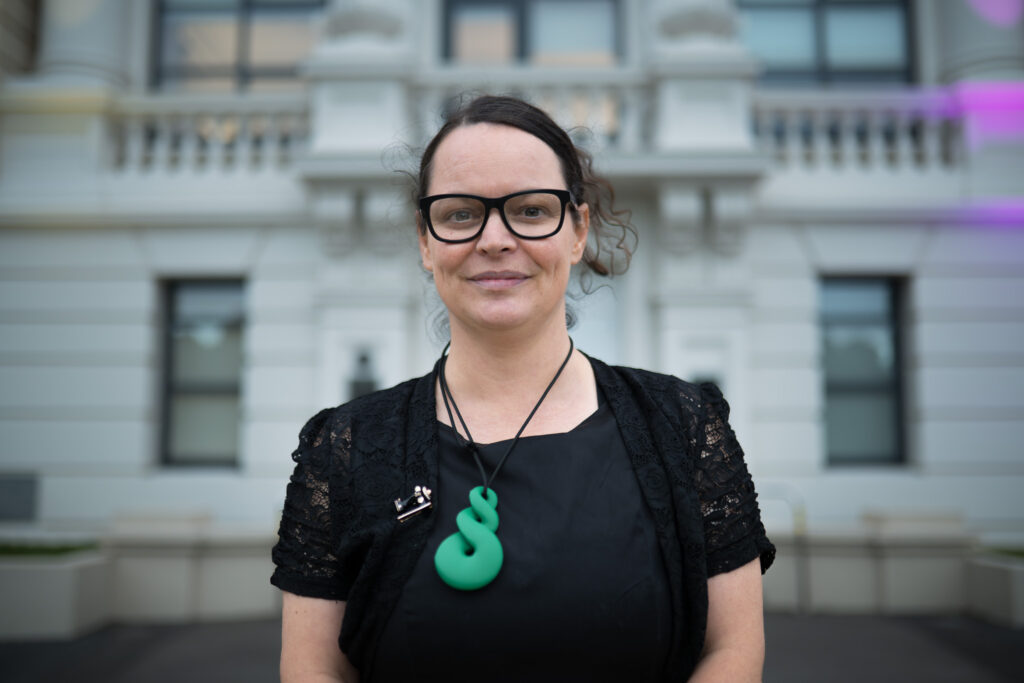
From fashion and textiles to 3D printing, wearable technology and sustainable design, Nan Walden (Te Aitanga-a-Māhaki) has built a teaching career around turning ideas into things. The 2025 Prime Minister’s Science Teacher Prize winner teaches Technology and Te Ao Māori at Wellington East Girls’ College, where she combines emerging technologies, mātauranga Māori and real-world projects to get students designing, making and problem-solving. NZASE chats with Nan about why failure matters, what our tūpuna can teach us about technology, and preparing students for a rapidly changing technological world.
Please share your journey into science/technology teaching
I grew up in Masterton, Wairarapa, where I developed a love of fashion and textile design at college and studied it at [the former] Wellington Polytechnic, then Massey University Wellington School of Design. I was always creating, making, and solving problems from an early age. I have always been fascinated by how ideas can be transformed into real products through design, materials, and technology. If science is the theory, then technology is the practical. That curiosity inspired me to pursue a career where I could combine creativity, innovation, and education. I worked in the New Zealand fashion industry for a while but became disillusioned by the wasteful cycles of fast fashion. I went to live in Japan and taught English to fund my OE but ultimately found a love for education and human connection.
My passion for technology extends beyond the classroom into industry and research. I have continued to develop my expertise through postgraduate study, recently graduating with a master’s in design and industry partnerships, exploring areas such as advanced manufacturing, wearable technology, robotics, sustainable materials, and circular design. These experiences have shown me the importance of ensuring that students are learning the skills they will need for the future.
I completed my teacher training in New Zealand and have taught a range of Technology subjects, including Materials Technology, Design and Visual Communication, Fashion Technology, Digital Technologies, and Te Ao Māori. Throughout my career, I have been committed to creating authentic, project-based learning experiences that connect students with real-world challenges and encourage creativity, critical thinking, and innovation. I was TIC of fashion and textiles for 10 years at Hutt Valley High School, HOD of Technology at St Catherine’s College, Learning Lead of Tech at St Mary’s College Wellington and now Design and Evaluation Lead of Te Ao Māori at Wellington East Girls’ College.
I believe technology is one of the most exciting learning areas because it empowers students to become designers, makers, innovators, and problem-solvers. My goal is to inspire students to see themselves as capable creators who can use technology to improve their communities and shape a better future.
I am currently a Technology Teacher at Wellington East Girls’ College, where I teach Year 9 Te Ao Māori and Year 10 Materials Technology. Alongside my teaching, I continue to work with industry and research partners to bring emerging technologies and sustainable design practices into the classroom. My vision is to build a future-focused technology programme that reflects the refreshed curriculum, embraces mātauranga Māori, and equips young people with the confidence and skills to thrive in an ever-changing world.
What does science/technology teaching look like in your classroom on a good day?
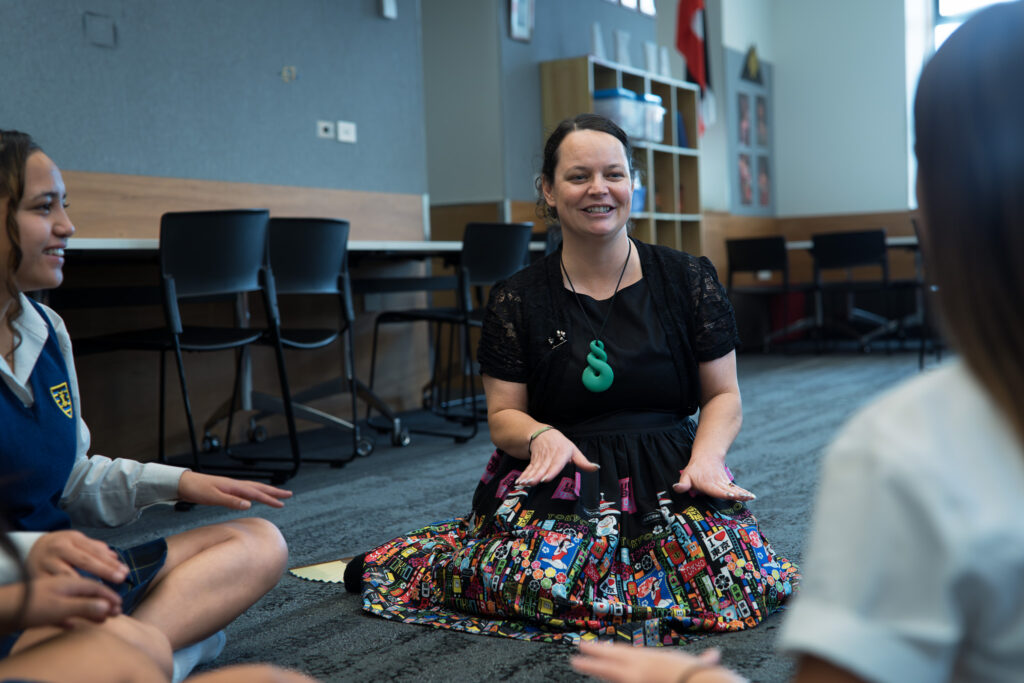
At the moment, I’m teaching a unit called Kohara2Shine, where students work collaboratively in small groups to design and create wearable art. Using papier-mâché, PVA glue, and recycled brown paper shopping bags, they sculpt their designs directly onto mannequins, transforming everyday materials into incredible works of art.
It has become the highlight of my day. Walking into a classroom where every student is completely immersed in the creative process—music playing, conversations buzzing with ideas, and students genuinely disappointed when it’s time to pack up—is incredibly rewarding. The level of engagement is unlike anything I’ve experienced.
Knowing that their finished pieces will be professionally exhibited at Massey University at the end of the term has created an authentic purpose for their learning. The students have genuine ownership of their work, and their commitment, creativity, and pride in what they are producing is inspiring to see.
How do you engage students who might not be interested in science/technology?
One of the most effective ways I engage students is by introducing them to emerging technologies. Demonstrating technologies such as 3D printing captures their imagination and helps them see how innovation can be used to solve real-world problems. It sparks curiosity and encourages them to think creatively about the possibilities of technology.
Sharing my own professional experiences also helps to build their interest. Telling students that I am a World of WearableArt (WOW) finalist immediately captures their attention and shows them that the skills they are learning have authentic, real-world applications. Likewise, receiving the Prime Minister’s Award has generated a great deal of curiosity and excitement in the classroom. By modelling lifelong learning, creativity, and a commitment to innovation, I hope to inspire my students to challenge themselves, participate fully, and believe that they too can achieve extraordinary things.
Are there local places, people or issues you use to help connect science/technology to students’ lives?
One of the most inspiring industry partnerships I have developed has been with Kiwifil, a New Zealand company based in Tokoroa that is leading the way in sustainable 3D printing materials. During my visit, I had the opportunity to see their innovative manufacturing process firsthand and even produce my own 3D printing filament from recycled plastic bottles. Witnessing discarded waste being transformed into a high-quality material for additive manufacturing was a powerful demonstration of what a truly circular economy can look like. This experience had a significant influence on my own practice and research. I incorporated Kiwifil’s recycled filament into my Master of Design project, where I explored sustainable design, advanced manufacturing, and the potential of additive technologies to create meaningful outcomes while reducing environmental impact. Being able to use a material that was both locally produced and created from recycled waste reinforced the importance of designing with sustainability at the forefront. Having an ongoing relationship with Kiwifil has been incredibly valuable, both professionally and educationally. Their work provides authentic, real-world examples that I can bring directly into the classroom, helping students understand how innovation, engineering, and environmental responsibility intersect. It allows me to show students that sustainability is not just a concept we discuss—it is actively shaping the future of design and manufacturing in Aotearoa. By sharing my experiences and the knowledge I have gained through this partnership, I hope to inspire students to think critically about the materials they use, embrace emerging technologies, and recognise that they have the power to design solutions that make a positive difference in the world.
How do you incorporate mātauranga Māori into your teaching?
Mātauranga Māori is woven throughout my teaching rather than being treated as a separate topic. I believe it is important for all students to understand and value the knowledge, values, and perspectives that are unique to Aotearoa New Zealand. My aim is to create learning experiences that are authentic, culturally responsive, and connected to the world around them. In my technology and Te Ao Māori classes, I intentionally design units that incorporate Māori concepts, histories, and values. For example, Year 9 students explore topics such as pōwhiri, the Kīngitanga movement, Kupe, and Te Wiki o te Reo Māori, enabling them to develop an understanding of tikanga, whakapapa, leadership, identity, and belonging. We also take learning beyond the classroom through experiences such as visiting Matiu/Somes Island, where students connect historical narratives with the physical landscape. In Technology, mātauranga Māori is embedded through design thinking and sustainable practice. Students are encouraged to consider concepts such as kaitiakitanga, manaakitanga, and whanaungatanga when designing and creating solutions. Whether they are developing wearable art, creating products from recycled materials, or exploring emerging technologies such as 3D printing, they are challenged to think about the environmental, cultural, and social impact of their decisions. My own research has also shaped my teaching. Through my Master of Design, I explored sustainable manufacturing and circular design, and I continue to integrate these ideas into my programmes. I encourage students to see the connections between traditional Māori values of caring for the environment and contemporary technologies that support more sustainable futures. I also believe that relationships are central to effective teaching. I strive to create a classroom where every student feels seen, respected, and connected. I use te reo Māori naturally in everyday classroom interactions, acknowledge tikanga where appropriate, and create opportunities for students to share their own cultural knowledge and experiences. Building strong relationships with whānau and the wider community is an important part of this approach. Ultimately, incorporating mātauranga Māori is about more than including Māori content—it is about creating learning that reflects the bicultural foundations of Aotearoa, values diverse ways of knowing, and empowers students to become thoughtful, culturally responsive, and innovative citizens.
Do you have any partnerships with local iwi or hapū?
At Wellington East Girls’ College, I have been incredibly fortunate to teach within the Te Ao Māori department. Our Principal, Gael Ashworth, and our Board of Trustees are deeply committed to honouring Te Tiriti o Waitangi and improving outcomes for Māori students while fostering a genuine bicultural partnership that benefits all learners. This commitment is reflected in the culture of our school and the meaningful relationships we have developed with mana whenua.
Through these partnerships, I have had many opportunities to engage with mana whenua, seek guidance, and learn from local knowledge holders. These relationships have enriched both my teaching practice and my own understanding of mātauranga Māori. As the staff representative on the Board of Trustees, I have the privilege of working alongside our mana whenua representative, whose perspective is invaluable in shaping the strategic direction of our school. We are also supported by a mana whenua advisor who provides ongoing professional learning and guidance to staff. She has been an incredible mentor throughout my teaching journey at Wellington East Girls’ College, generously sharing her knowledge, challenging my thinking, and supporting my growth as an educator.
Alongside my professional learning, I have continued to deepen my own cultural knowledge through my iwi, Te Aitanga-a-Māhaki. In 2023, I completed a Diploma in Tikanga through Te Wānanga o Aotearoa, with a particular emphasis on the tikanga, history, and practices of my own iwi, hapū, and marae at Takipū, Te Karaka. This study strengthened my understanding of my identity and has given me greater confidence to authentically incorporate Māori perspectives into my teaching.
I recognise that learning about te ao Māori is a lifelong journey. I do not see myself as having all the answers; instead, I approach my learning with humility, curiosity, and a willingness to listen. I am incredibly grateful for the support, guidance, and generosity I have received from colleagues, mana whenua, kaumātua, and iwi. Their encouragement has helped shape the teacher I am today, and I remain committed to continuing this journey so that I can provide culturally responsive, authentic learning experiences that honour Te Tiriti o Waitangi and empower all students to succeed.
What’s a challenge you’re currently facing as a science/technology teacher?
One of the biggest challenges we are currently facing as Technology teachers is preparing for the implementation of the new Technology curriculum. This change represents a significant shift in both what we teach and how we teach it, requiring schools to rethink programmes, resources, assessment, and teacher capability.
I feel incredibly fortunate to have recently completed a one-term secondment with the Ministry of Education as a Product Design Specialist. In this role, I facilitated curriculum writing teams in Technology, giving me first-hand insight into the vision behind the new curriculum and the direction Technology education is heading. This experience has given me confidence in the changes that are coming and a strong understanding of how we can begin preparing our programmes to ensure our students benefit from them.
While there is still work to be done in refining aspects of the curriculum, I am genuinely optimistic about its potential. I believe that, if implemented well and supported by high-quality, targeted professional learning and development, the new curriculum will significantly enhance Technology education across New Zealand. It provides an exciting opportunity to develop students’ creativity, critical thinking, problem-solving, and future-focused design capabilities in ways that are more authentic and connected to industry than ever before.
I am also incredibly fortunate to work alongside a supportive Learning Area Leader, Keala Senek, who shares this vision for the future of our department. Together, we are planning to expand our additive manufacturing and digital fabrication capabilities while continuing to strengthen Resistant Materials Technology. These developments will provide students with access to emerging technologies and modern manufacturing processes that better prepare them for future pathways in design, engineering, and innovation.
To successfully navigate this transition, I believe the most important priority is ensuring that teachers have ongoing access to quality professional development, time to collaborate, and opportunities to build confidence with both the new curriculum and new technologies. As we invest in new equipment for our department, it will also be essential that staff have the opportunity to develop the technical knowledge and pedagogical skills needed to use these tools effectively.
I see this curriculum refresh not as a challenge to be feared, but as an exciting opportunity to reimagine Technology education. With the right support, collaboration, and professional learning, I believe we are on the verge of a significant step forward that will empower both teachers and students and ultimately raise the quality of Technology education in Aotearoa New Zealand.
How do you approach assessment in your classroom?
My preferred pedagogical approach is contextualised, project-based learning centred on authentic, high-stakes, real-world contexts. I design learning experiences that require students to respond to genuine design challenges, creating solutions for real clients, stakeholders, or community needs. This approach gives learning purpose and relevance, enabling students to see the value of what they are creating beyond the classroom.
Within this model, assessment is embedded throughout the learning process rather than occurring solely at its conclusion. Students design, test, refine, and reflect while I gather ongoing formative evidence of their progress. This allows me to provide timely feedback, adapt my teaching to meet individual learning needs, and support students to improve continuously throughout the project.
The formative assessment naturally culminates in summative assessment, with students demonstrating their learning through the authentic outcomes they have developed. As a result, assessment becomes a by-product of meaningful learning rather than the primary focus. Students become invested in producing high-quality work because they are motivated by the purpose of the project, the needs of the stakeholder, and the impact of their final outcome, rather than simply achieving a grade.
I have found this approach to be highly effective in increasing student engagement, ownership, and motivation. It encourages creativity, critical thinking, collaboration, problem-solving, and resilience, while fostering a classroom culture where learning is valued as an iterative process. Students develop the confidence to take risks, respond to feedback, and produce outcomes that reflect both technical excellence and thoughtful design thinking.
What’s one activity, strategy or resource you’d recommend to other science/technology teachers?
Never stop learning yourself. As teachers, we are the most powerful models of learning that our students will encounter. If we expect our students to embrace challenges, take risks, persevere through setbacks, and learn from failure, then we must be prepared to demonstrate those behaviours ourselves. I believe it is important for students to see that learning is a lifelong journey and that success is rarely achieved without persistence.
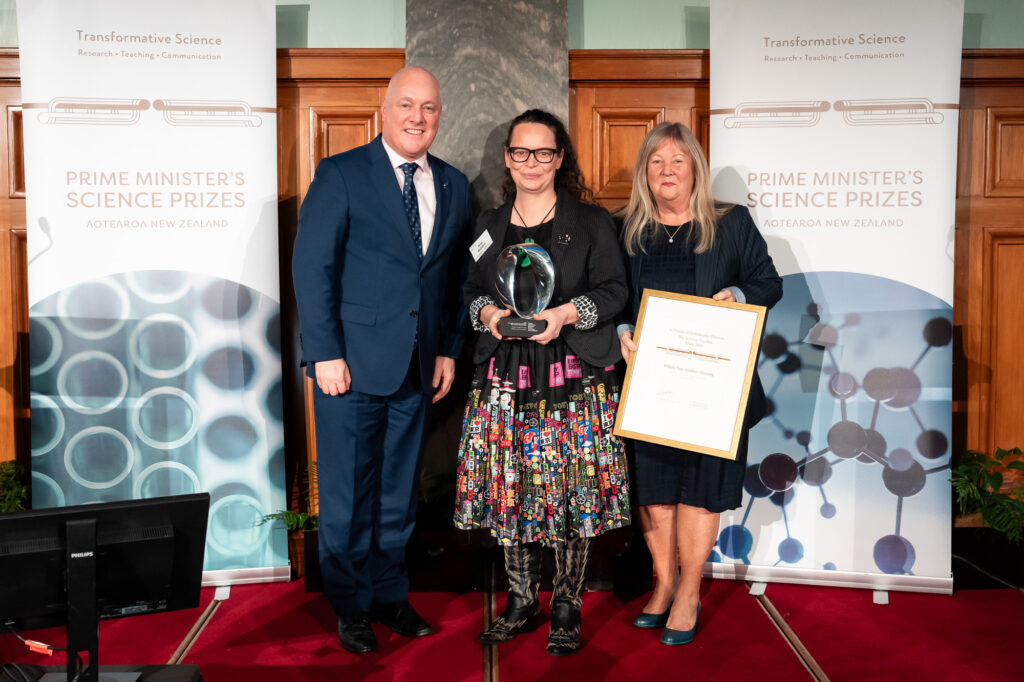
I was incredibly honoured to receive the Prime Minister’s Science Teacher Prize, and it remains one of the highlights of my teaching career. However, what many people do not see is the number of setbacks and disappointments that came before that achievement. I make a conscious effort to share these experiences with my students because I want them to understand that success is built on resilience rather than perfection.
This year, I am proud to be a finalist in the World of WearableArt Awards alongside my collaborator, Jann Lenihan—my mum. Being selected as a finalist is an incredible achievement, particularly as it is our second time reaching the finals. My Year 10 Materials Technology students hear about this often because they are currently completing their own wearable art project. What they find most surprising is that we have entered the competition nine times. We were unsuccessful on seven occasions before being selected as finalists twice.
For me, this is one of the most valuable lessons I can teach. Failure is not the opposite of success; it is an essential part of achieving it. Every unsuccessful application, competition entry, or missed opportunity has taught me something new, strengthened my skills, and made me a more resilient designer, educator, and learner.
I encourage my students to seize every opportunity that comes their way. I tell them to keep applying, keep creating, keep asking questions, and keep putting themselves forward, even when success is not guaranteed. They will almost certainly experience more setbacks than successes throughout their lives, but each challenge offers an opportunity to grow, reflect, and improve.
Ultimately, I believe the learning journey is far more important than the destination. The process of developing knowledge, refining skills, embracing feedback, and building resilience is where the real learning takes place. Success, awards, and recognition are wonderful outcomes, but they are simply the bonus. It is the courage to continue learning, despite failure, that truly defines success.
What’s something your students have taught you?
My students have taught me that when learning feels real, it changes everything. When students are given something meaningful to work on, trusted with responsibility, and able to create something that has a purpose beyond just getting a grade, they often surprise themselves with what they can achieve. I have seen students become more confident, creative, and resilient when they are given the chance to solve problems, make decisions, and take ownership of their learning. It has reminded me that teaching is not just about delivering content; it is about creating experiences where students feel inspired, capable, and proud of what they can do. My students continue to make me a better teacher because they remind me that the best learning happens when it has purpose, challenge, and a sense of enjoyment.
What keeps you inspired about teaching Technology?
I stay in technology teaching because I love the constantly evolving nature of the subject. Technology never stands still, and that creates an exciting challenge as an educator—I am always learning new tools, techniques, materials, and processes alongside my students. This continuous growth keeps me curious, motivated, and passionate about my practice.
What I find particularly powerful about technology is the connection between innovation, creativity, and problem-solving. I enjoy helping students understand that technology is not just about modern tools and digital systems; it is about human ingenuity and the ways people have always designed solutions to meet their needs.
I am especially inspired by the technologies and innovations developed by our tūpuna. Their knowledge, resourcefulness, and deep understanding of materials, environments, and systems continue to influence my teaching practice today. Exploring toi Māori and mātauranga Māori has strengthened my understanding that technology is not new—it is an ongoing expression of creativity, knowledge, and problem-solving passed down through generations.
For me, technology education sits at the intersection of the past, present, and future. It allows students to honour the innovations of those who came before them while developing the skills, confidence, and creativity needed to design solutions for the challenges of tomorrow.
Main image: Royal Society Te Apārangi