The latest NZASE newsletter, sent on 19 August, is now available online. Highlights include updates on the new Years 0–10 Science curriculum, classroom resources, upcoming science education events and professional learning opportunities. This issue also explores the 20-year impact of Owairoa Primary School’s dedicated science classroom, features a Teacher Q&A with award-winning technology educator Nan […]
Read MoreInside Owairoa Primary School’s hands-on science classroom
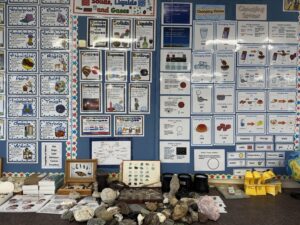
For nearly 20 years, Owairoa Primary School has been teaching science in a dedicated classroom. NZASE chats with Assistant Principal Anita Randhawa and Science Technician Eiman Farid about what they’ve learnt along the way—from practical science, planning and equipment to building teacher confidence—and what other schools can take from their experience with a dedicated science […]
Read MoreTeacher Q&A | Nan Walden | Technology and Te Ao Māori Teacher | Wellington East Girls’ College
From fashion and textiles to 3D printing, wearable technology and sustainable design, Nan Walden (Te Aitanga-a-Māhaki) has built a teaching career around turning ideas into things. The 2025 Prime Minister’s Science Teacher Prize winner teaches Technology and Te Ao Māori at Wellington East Girls’ College, where she combines emerging technologies, mātauranga Māori and real-world projects […]
Read MoreCurriculum Resources and Teacher PLD
MOE | Phase 4 (Year 9) Science Learning Kit MoE has produced learning kits for Year 9 Science; including annual plans, unit plans, and associated lesson plans. Available here. NZASE | Phase 4 (Year 9) resources NZASE’s regional branches have developed three sample Phase 4 (Year 9) units: Please note: Curriculum links are based on […]
Read MoreNZASE Newsletter | 5 August 2026
The latest NZASE newsletter, sent on 5 August, is now available online. Highlights include curriculum updates, classroom resources, upcoming science education events and key dates for teachers. This issue also features our latest interview with deep-sea fish zoologist Dr Thom Linley, a Teacher Q&A with science educator Jane Thomas, an overview of the Science Teaching […]
Read MorePOSTER: Where can science take you? | Deep-sea Fish Collector Dr Thom Linley
What does it take to explore one of the least-known places on Earth? Meet Dr Thom Linley, a deep-sea fish zoologist and Curator of Fishes at Te Papa Tongarewa, whose work is uncovering the remarkable creatures that live thousands of metres beneath the ocean’s surface. In the latest addition to our Where Can Science Take […]
Read MoreRoyal Society Te Apārangi | Science Teaching Leadership Programme
What does science look like beyond the classroom? The Science Teaching Leadership Programme gives primary and secondary teachers the opportunity to find out, spending two school terms within a science-focused organisation and gaining first-hand insight into science in research, industry and the wider community. Delivered by the Royal Society Te Apārangi and funded by the […]
Read MoreTeacher Q&A | Jane Thomas | Science Lead Teacher, Favona School
From exploring muddy estuaries to using pūrākau to understand Auckland’s volcanic landscape, Jane Thomas (Samoan descent, from the villages of Lufilufi and Solosolo, Upolu) believes science comes alive when students experience it for themselves. In this Teacher Q&A, the Science Lead Teacher and Year 6 classroom teacher at Favona School, Auckland, shares how hands-on learning, […]
Read MoreNZASE Newsletter | 22 July 2026
The latest NZASE newsletter, sent on 22 July, is now available online. Highlights include curriculum updates, resources, upcoming science education events and key dates for teachers. This issue also features practical advice from former STANZ president Arwen Heyworth on making the most of your science technician, a companion poster with tips for building strong teacher–technician […]
Read MorePOSTER: Top tips for working well with your science technician
Working well with your science technician is a practical, one-page checklist designed to help science teachers build great partnerships with their science technician. Covering everything from planning ahead and communicating clearly to ordering early and providing feedback, these simple tips can save time, improve practical lessons, and create safer, more successful science learning for every […]
Read More