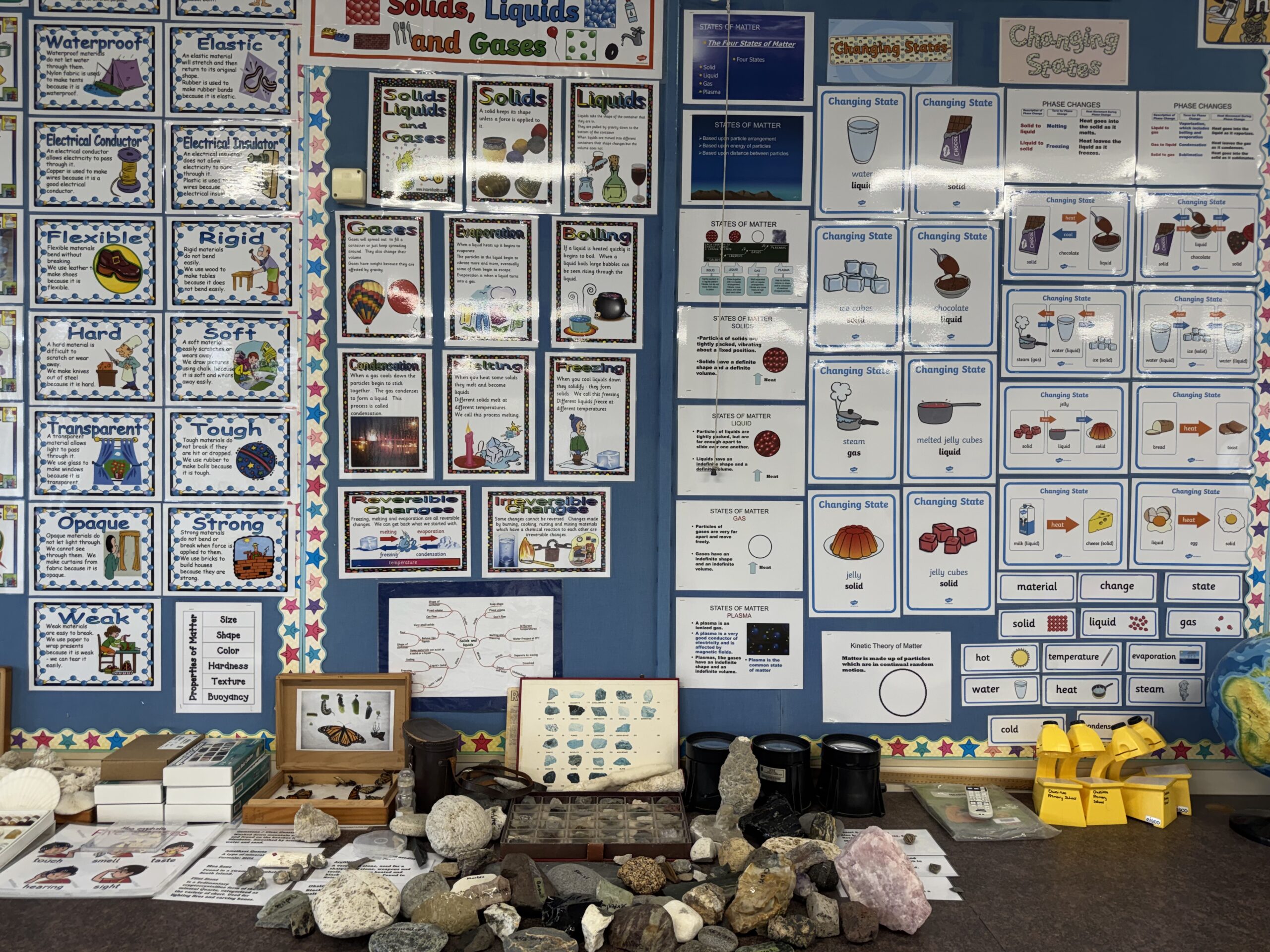
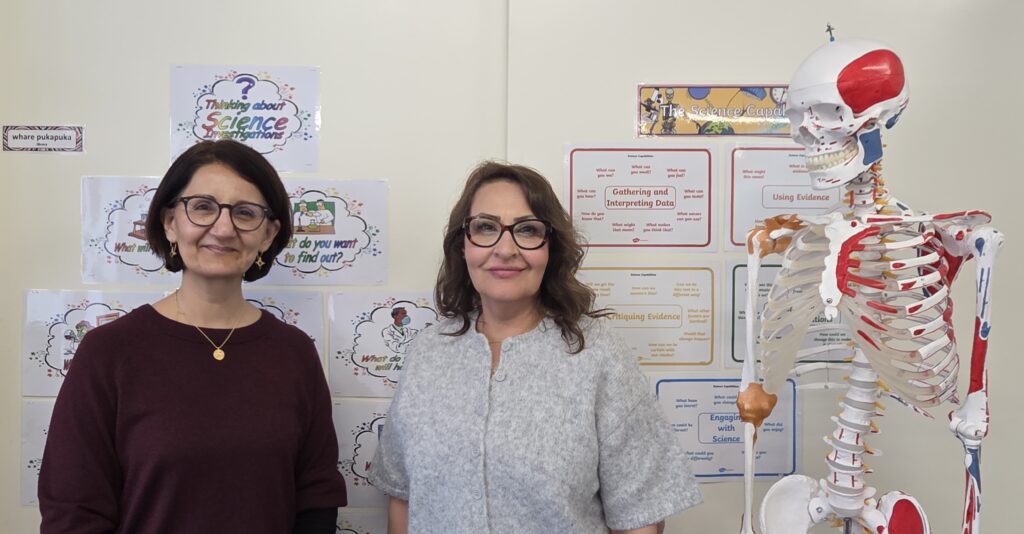
For nearly 20 years, Owairoa Primary School has been teaching science in a dedicated classroom. NZASE chats with Assistant Principal Anita Randhawa and Science Technician Eiman Farid about what they’ve learnt along the way—from practical science, planning and equipment to building teacher confidence—and what other schools can take from their experience with a dedicated science room.
Owairoa Primary School in Howick opened its purpose-built science classroom in 2007 to give students opportunities to experience practical, hands-on science, and now nearly two decades later, what began as a two-day-a-week initiative has grown into a full-time programme, with every year level receiving weekly specialist science lessons.
Along the way, the school has learnt valuable lessons—not only about what makes a successful science classroom, but also about building teacher confidence, securing leadership support, making smart purchasing decisions and creating lesson plans robust enough to endure staff changes and shifting curricula.
Creating a dedicated science space
Anita Randhawa has been at Owairoa since 2010, taking over leadership of the programme from Science Lead Sue Stone in 2015. At the time, students were thriving when science was taught explicitly through practical investigations and discussion, and inquiry learning was becoming increasingly common in New Zealand primary schools, bringing opportunities for cross-curricular learning—but also raising questions about whether science was always getting the explicit attention it needed. Feedback from local secondary schools also highlighted to Anita the need for students to develop a stronger science foundation before transitioning to college, which prompted the programme to expand from two days a week to a full five-day programme, now offering half an hour for Years 0-3 and 45 minutes from Year 4 onwards.
“The idea behind developing the science room and getting it to five days a week was to ensure that every student in the school got to have some explicit teaching in science. Which then, once they had that knowledge, could be applied and integrated through STEM and iSTEAM.” It also allowed knowledge continuity between years, and no class was excluded.
Classroom design and equipment
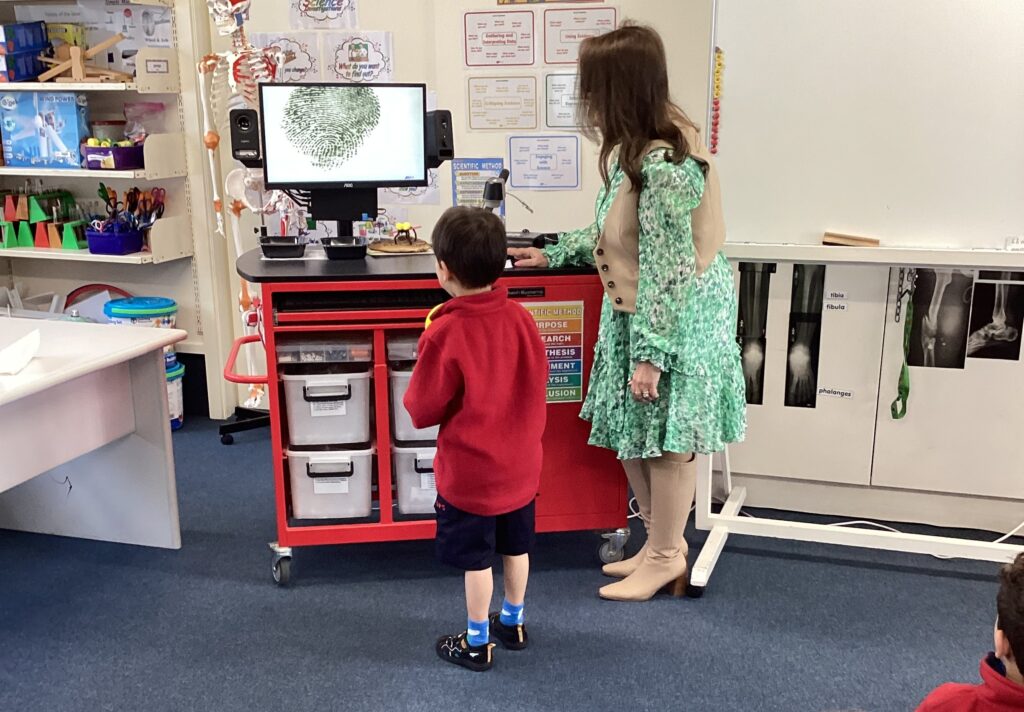
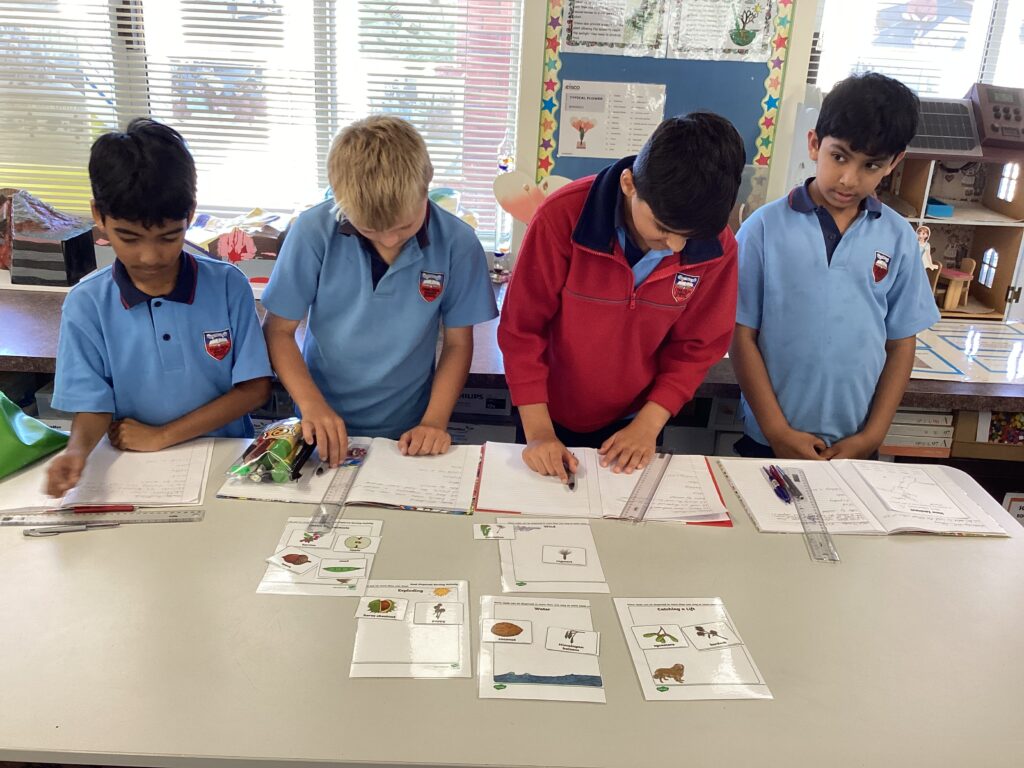
The room was designed to make hands-on science straightforward to teach, with students generally working in small groups of three. “It encourages them to ask questions, discuss ideas, carry out investigations and share their thinking,” Anita says. “We wanted science to be something students actively did, rather than something they simply learnt about.”
Flexible furniture, equipment kept close at hand and space for demonstrations mean practical investigations can happen without constantly rearranging the room. Science Technician Eiman Farid, who has worked at Owairoa since 2007 and now works 29 hours a week, prepares equipment and resources ahead of lessons, reducing the setup and pack-down load for classroom teachers.
Principal Alan McIntyre and the school board backed the original vision for a dedicated science space, allowing the school to steadily build a range of hands-on science experiences and resources to support most lessons. “We started with lots of basic science equipment,” says Eiman. “And now, for whatever topic we decide on for each year, we have almost everything. And we keep adding to our equipment.” Each year a curriculum review is completed by staff to establish any gaps in resourcing, which dictates the budget for the following year submitted to the school board for approval.
One of the most popular pieces of equipment, the mobile digital microscope trolley, was purchased through an external grant, a tool Anita and Eiman consider all schools should have access to. “[It] allows students to view specimens together, share observations in real time, and explore the microscopic world in ways that simply weren’t possible before,” says Anita. Miniature viewers also get the students enthused, says Eiman; students often appear at lunchtime with insects for viewing.
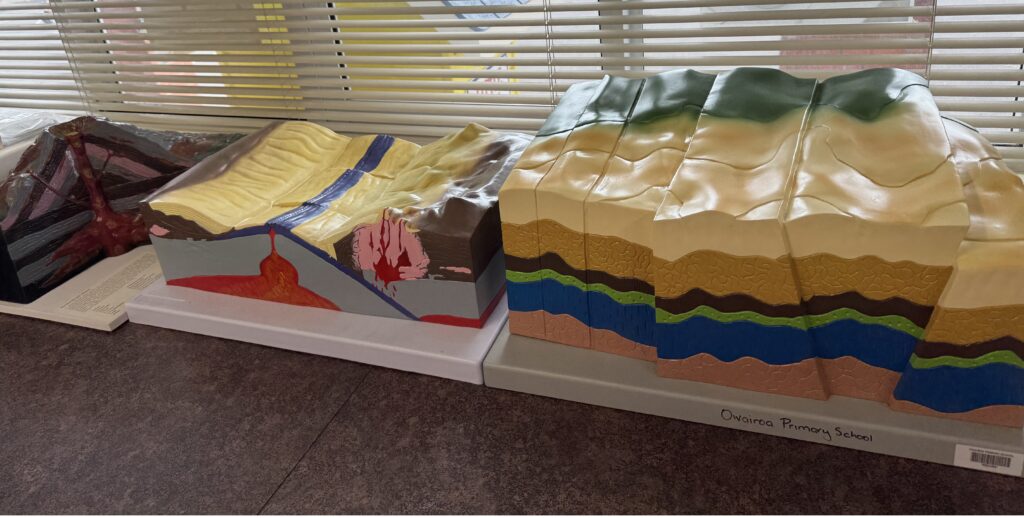
As a science technician, having an impressive collection of resources makes Eiman’s role much easier. Popular models include insects, volcanoes, a human skeleton showing muscles and ligaments, parts of a flower, a human torso with removable organs, animal and plant cells, life-cycle models and physical working models of levers and other simple machines. “It’s easy for [students] because when they see it, they can understand,” says Eiman.
Lesson planning
Lessons are built around a school-wide science progression that Anita originally developed from the curriculum, drawing on her science degree and experience teaching and leading science across Years 1–6. Planning then happens collaboratively within each year-level team, with teachers developing and adapting lessons together rather than working from plans created by a single science specialist. Supporting this is a Science Committee with a representative from each year group. The aim is to build science expertise across the school, with representatives helping colleagues with planning, troubleshooting lessons and sharing ideas. Teacher capability has also been developed through regular PLD on areas such as science capabilities, the scientific method and the nature of science, alongside input from external experts and programmes including the Sir Paul Callaghan Science Academy. Teachers have benefited from PLD led by science educators Ruud Kleinpaste and Dr Ally Bull, while experts from Auckland Museum and the planetarium have worked alongside students.
“One of the strengths of our programme is that science remains the responsibility of every classroom teacher,” says Anita. Teachers bring their classes to the science room and teach the lessons themselves, supported by Eiman who prepares resources, manages equipment, and provides support during practical investigations—enabling teachers to focus on quality teaching and learning.
That established progression is also helping the school prepare for curriculum change. After trialling the draft 2027 science curriculum with Years 5–6 (this term Years 1-2 are also trialling it), Anita found it aligned with their existing approach. “So, when it’s officially announced, it won’t be a big leap for us. It will be actually a really smooth transition.”
She welcomes the curriculum’s clearer progression. “I think it’s making learning and teaching quite explicit about what needs to be taught. That’s helpful for staff…more clear and quite easy to use. It does have that progression, and that’s really good to see.”
Anita says the focus for the next few years will be on building teacher capability and adapting to the new curriculum, but she’d also like to see the dedicated space interact more with the school’s Enviroschools programme. While there are crossovers, she considers there are probably opportunities to make greater connections for them. “For me, science is basically everything. It’s the world around us. And I think to have a stronger element of how to care for it is a really important aspect.”
Trends
The dedicated space has sparked an interest and enthusiasm for science across all ages and genders, and formal assessments completed by Anita show improved scientific vocabulary has been a positive outcome. While it’s harder to track whether past students take up more science-based studies in high school and beyond, parents often share updates on former students—including a student who has recently completed her PhD in genetics at the University of St Andrews in Scotland and is heading home for research opportunities.
For Eiman, watching students see immediate results sparks interest: “We try to get [everyone] involved. And because it’s hands-on, and they see basically the changes straight away sometimes, they all love it. It’s different when you study in your classroom. Sometimes you hear [Year 2] kids talking about science, and they have lots of information. You get amazed by them. It’s great we can give them the opportunity. That’s why they thrive, and they’re more interested. We try to teach them that in everyday life, science is in everything you do.”
Top tips
For primary schools setting up a dedicated science area, it’s important to invest not only in resources, but also in building teachers’ confidence and capability to use them effectively, says Anita. She recommends starting with versatile, hands-on equipment that can support different topics and year levels, make resources easy to access, and give teachers opportunities to explore how they can be used. Above all, create a culture of curiosity where students are encouraged to ask questions, make predictions, test ideas, discuss their observations and explain their thinking. “I think that discussion is key.”
One thing every science room should have: Jumbo magnifiers and bug viewers.
What can teachers improvise or source cheaply? Consumable resources, e.g. butter, sugar, flour, etc.
What have you bought that sounded useful but wasn’t? We have been careful to buy items only related to planned teaching and learning.
Best purchase under $500: Earth, Sun and Moon model, Planetarium – Orbiter Solar System.
Biggest equipment mistake to avoid: Ensure resources relate to the curriculum and are age-appropriate.