
Sanctuary Mountain Maungatautari offers immersive, curriculum-linked conservation experiences for learners of all ages. Through hands-on activities and guided exploration of the ngahere, ākonga can encounter taonga species, investigate the challenges facing Aotearoa’s wildlife and discover the science and technology used to protect them. Programmes can be tailored to local learning priorities, with on-site visits, night walks, virtual sessions and overnight experiences available. Thanks to Phil Margetts, Poumātauranga | Education Team Leader, for sharing this EOTC opportunity.
Introduction
Nestled in the heart of the Waikato, around half an hour from Te Awamutu and Cambridge, Sanctuary Mountain Maungatautari (SMM) is the world’s largest fenced ecosanctuary. 730+ native species, including 3,000 kiwi and three kākāpō, reside within the old growth native forest, enabling SMM’s Education Programme to provide ākonga with a hands-on, immersive experience to help inspire them as future kaitiaki.
SMM offers onsite daytime visits for all ages of students as well as night tours, overnight stays and virtual sessions, combining time in the purpose-built education centre and in the ngahere. Students will learn about a range of topics including environmental care, mātauranga Māori and Aotearoa’s precious and unique native species.
What will students see, do or explore during a visit?
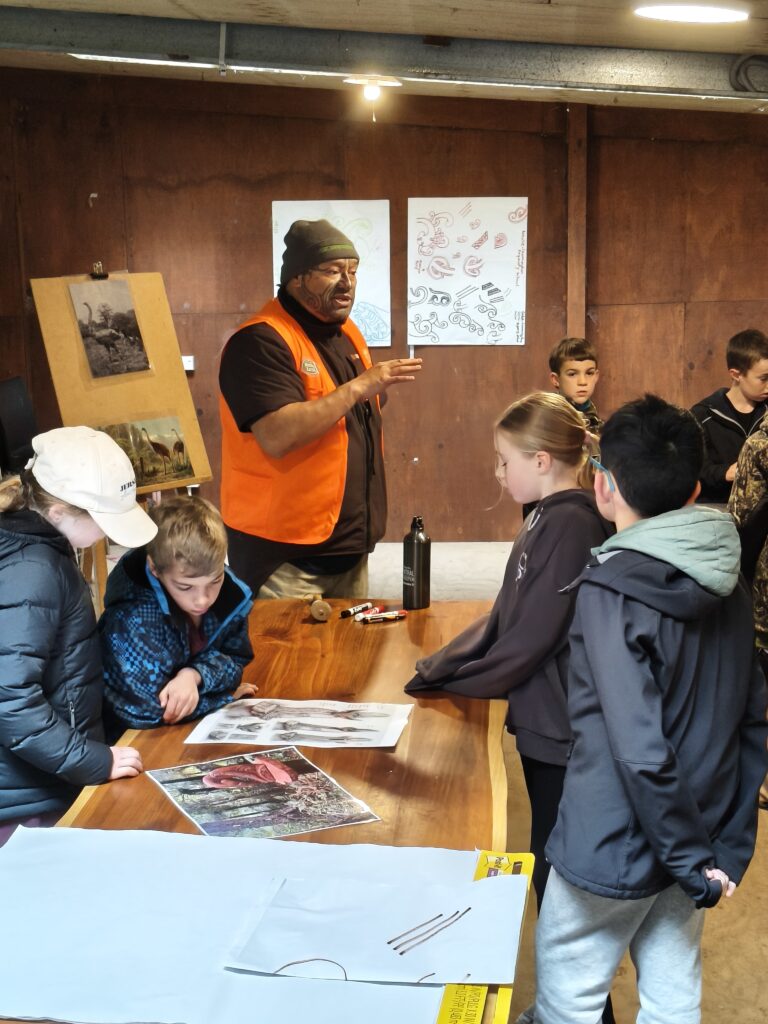
Students will be welcomed in the education centre where we will discuss the history of the sanctuary, the way we monitor for pests and the species that have been reintroduced to the maunga. These introductions are tailored specifically for each school to align with whatever classroom learning they have been undertaking.
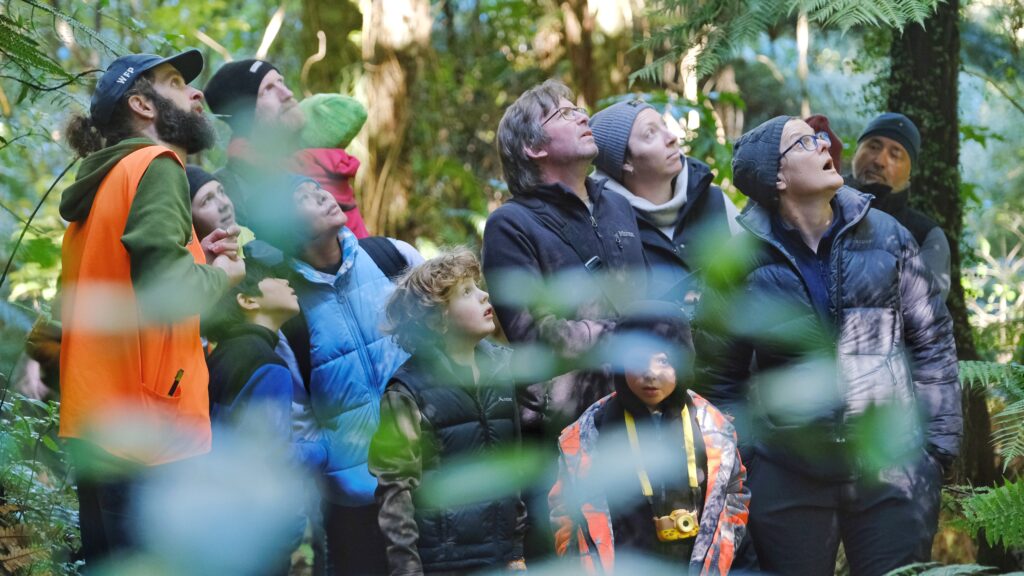
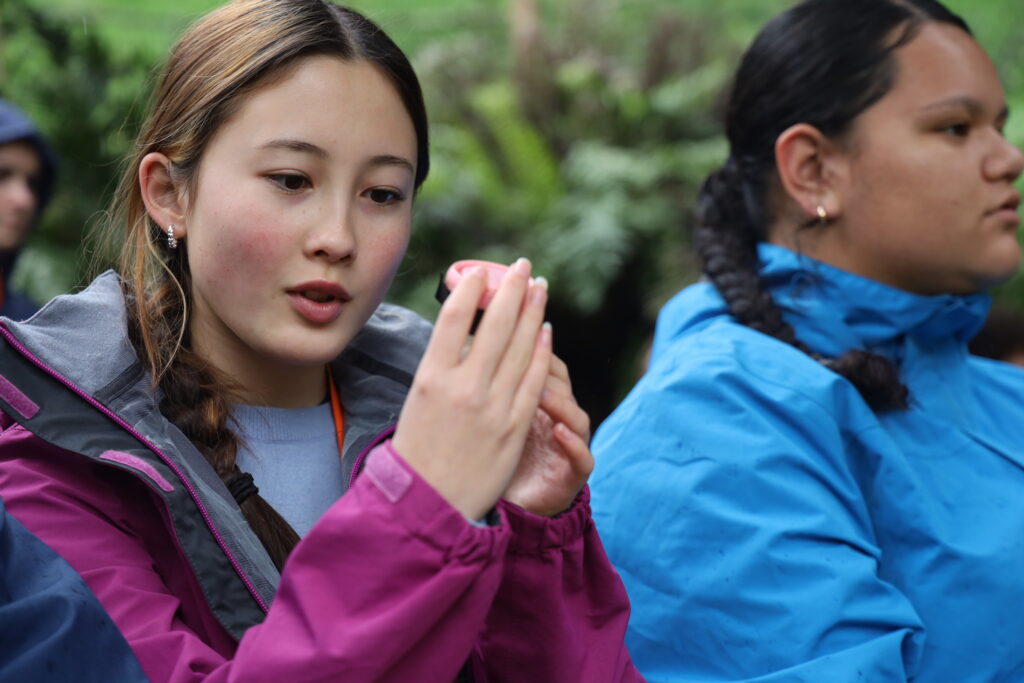
Groups will then explore the sanctuary’s ancient native forest, marvelling at giant rimu, northern rātā and rewarewa while listening to a range of birdsong that they may never have experienced before. What is seen in the sanctuary differs from day-to-day as it is a natural ecosystem, but our visitors are often delighted by curious pītoitoi/North Island robin, squawking kākā and flocks of pōpokotea/whitehead being followed by tīeke/saddleback and pīwaiwaka/fantails.
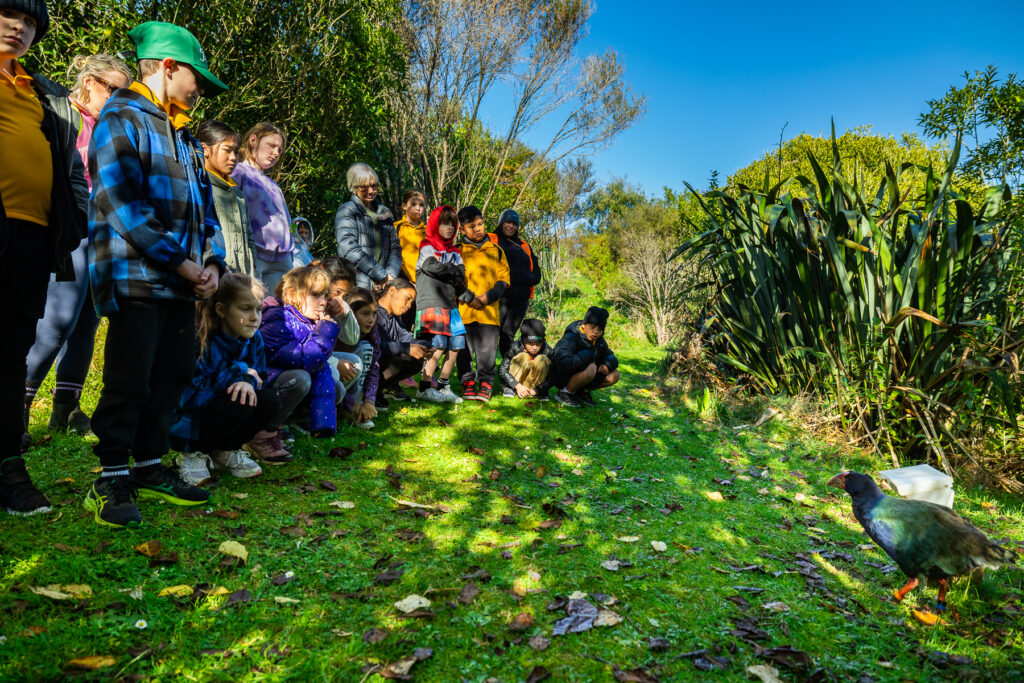
After lunch, groups sometimes visits the Tautari Wetland enclosure where there is the opportunity to see takahē and tuatara and learn about this important type of New Zealand ecosystem. Visits to the wetland are dependent on the age of students, weather conditions and takahē nesting.
As we wrap up our day we will share some highlights and discuss actions that students can take in their own communities to help our native species.
Can visits be tailored for different years?
Absolutely. We offer half day sessions for ECE groups and we take them on a shorter loop walk. We also welcome high school and tertiary groups and have resources and activities to support them with specific assessments or standards they may be working towards.
New Zealand Science curriculum connections*
Science – Nature of Science
Participating and contributing. Students will use their growing science knowledge when considering issues of concern to them. Students will explore various aspects of an issue and make decisions about possible actions.
Science – Living World
Life processes: Students will recognise that there are life processes common to all living things and that these occur in different ways.
Ecology: Students will explain how living things are suited to their particular habitat and how they respond to environmental changes, both natural and human-induced.
Evolution: Students will begin to group plants, animals, and other living things into science-based classifications. Students will begin to explore how the groups of living things we have in the world have changed over long periods of time and appreciate that some living things in New Zealand are quite different from living things in other areas of the world.
*These examples are taken from Level 3 of the curriculum but we can adapt to any year group. We’ve also only mentioned science achievement objectives but we can also work alongside teachers to include other curriculum areas e.g. geography, social sciences, technology, health, art, maths or languages.
Details
Most groups spend between two and four hours with us. We have an introduction session in the education centre before heading off into Te Tui a Tāne, the Southern Enclosure. Depending on the age of students and the time they have, we may also visit the Tautari Wetland enclosure where groups may see takahē and tuatara.
The focus of the day can be tailored to whatever learning area you want to focus on. As well science, we have spent days focusing on social sciences, health, mātauranga Māori, geography, maths, literacy, art and wellbeing.
Pre-visits
We welcome pre-visits. A member of our team can meet you and show you around the site and you can explore the sanctuary free of charge.
Contact details
Find out more from: Education at Sanctuary Mountain Maungatautari