On a remote island 800 kilometres east of mainland New Zealand, an ancient fish unearthed minutes from the school gates of Pitt Island School became a window into evolution, environmental change, and life 55 million years ago. NZASE chats with science communicator and geologist Jenny Stein, who explains how bringing local stories into the classroom transformed how the students connected with science.
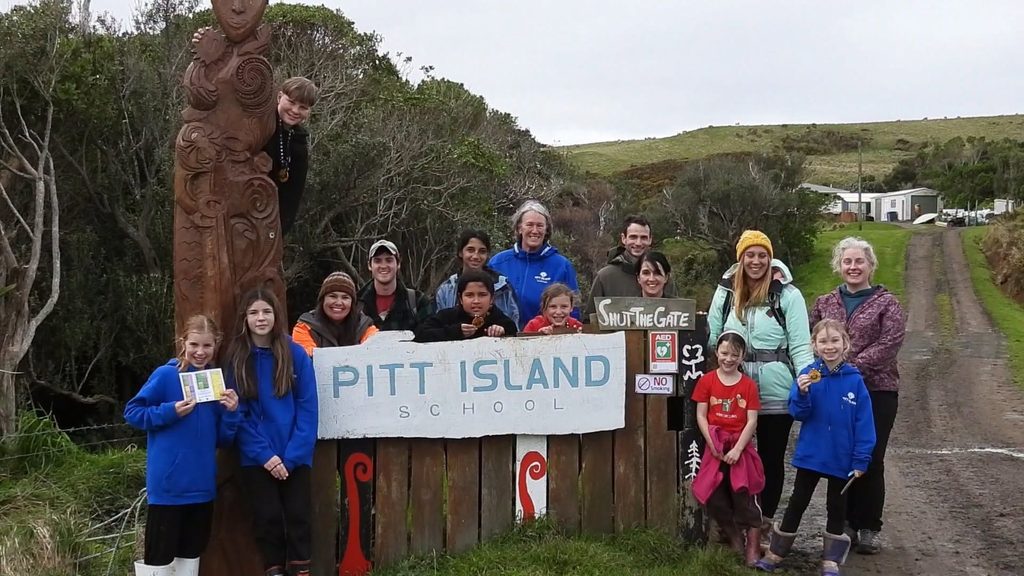
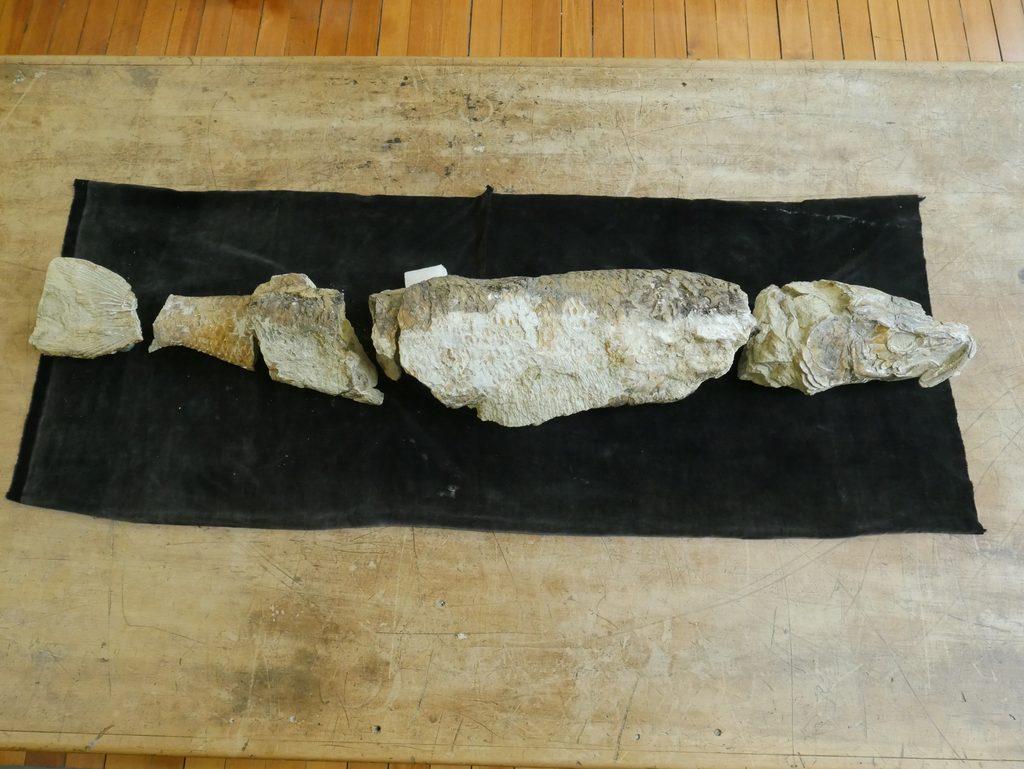
After laying out six pieces of a replica fossil in front of a dozen Pitt Island School students, geologist and science communicator Jenny Stein didn’t explain what they were or where they had come from. Instead, she asked: “What do you think this is?” Following clues in its skull, scales, tail and body shape, the students pieced together what the creature was, how it lived and where it came from. Then they realised the original taonga had been unearthed just a few kilometres from their classroom. “You could see the kind of surprise and shock and delight: ‘Wow, this is not just some random activity we are doing. It’s not just some random thing we’re learning. It’s something that’s ours. It’s something relevant to us. It’s from a place that we’ve been…it’s from my whenua,’” says Jenny.
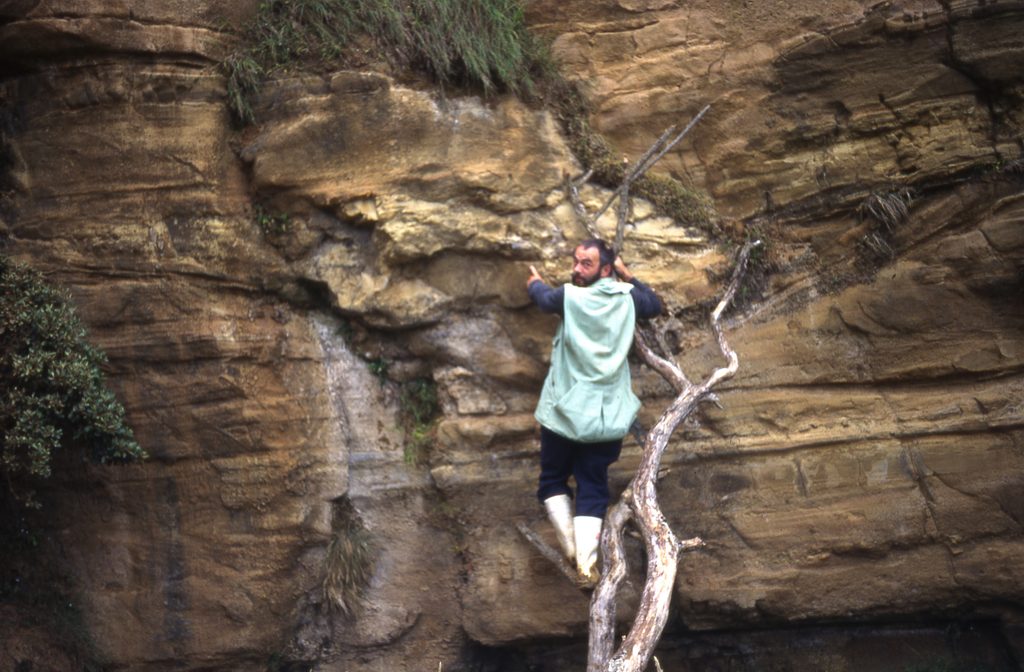
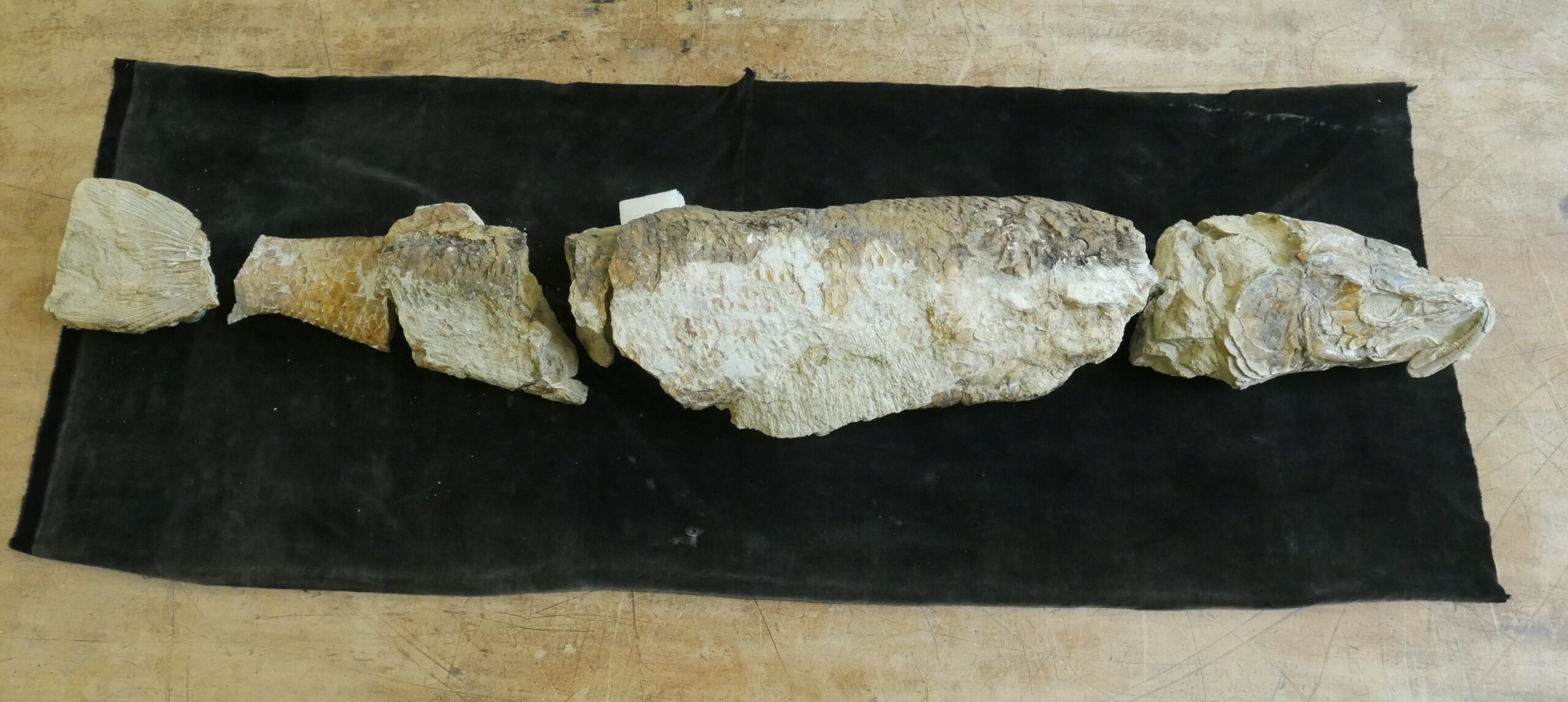
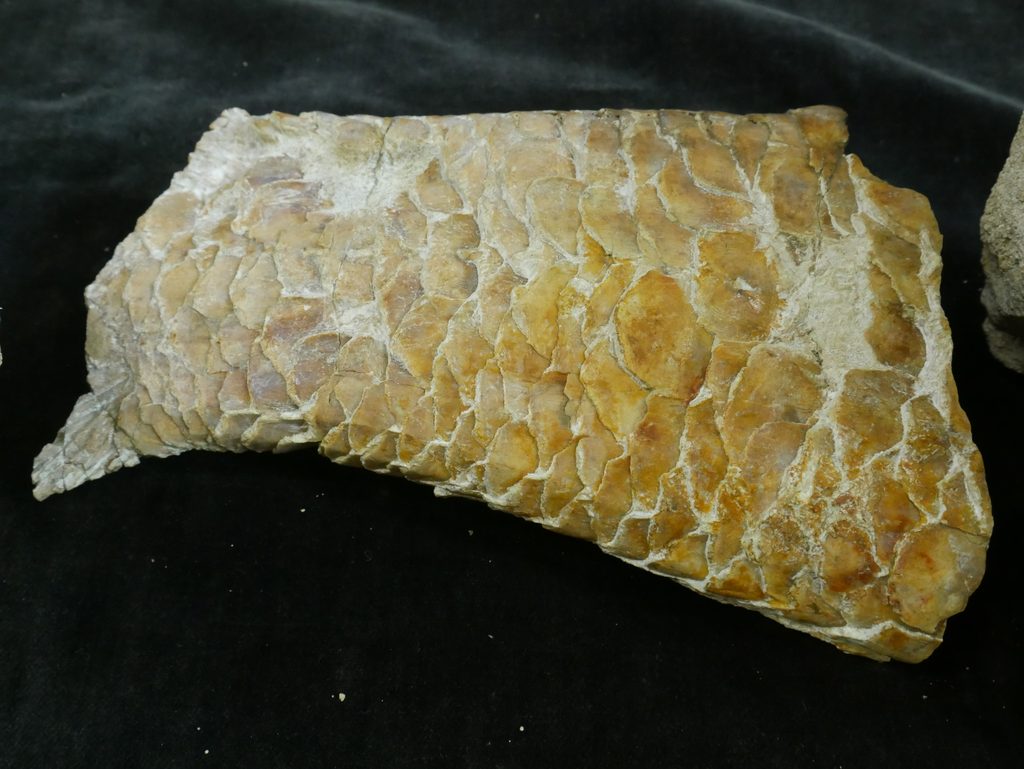
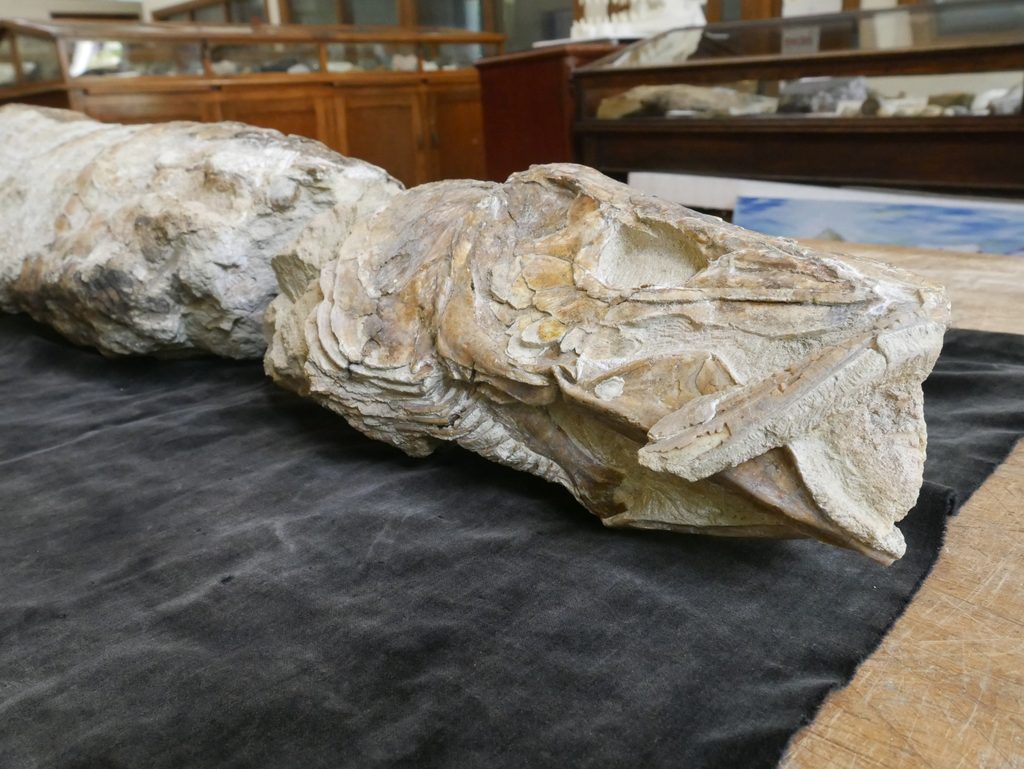
The pieces were of a fish fossil unearthed from a cliff above the Mars-red landscape of Waihere Bay on Pitt Island in 1999 by the late palaeontologist Dr Richard Köhler, who had been scouring the beach for small brachiopods when the protruding fossil caught his eye. With permission from the landowners, the 1.2-metre-long fossil was carefully collected and shipped to the University of Otago’s Department of Geology, where an international team effort catalogued it, aided by Richard’s field notebooks. It turned out to be a remarkably well-preserved example of a tarpon, a fish no longer found in New Zealand seas, and it was named Ikawaihere koehleri after Richard and the place it was found.
Jenny was on Pitt Island as part of her role supporting the annual Chatham Islands Festival of Science—a week-long programme of public talks and discussions bringing together local knowledge, scientific research and global perspectives. After helping with the festival the previous year, she was tasked with organising the 2026 outreach to all three schools across Chatham Island (Rēkohu/Wharekauri) and Pitt Island (Rangihaute/Rangiāuria).
First, she spoke with teachers, then paired their schools’ interests with scientists willing to turn their festival talks into engaging classroom experiences. When she spoke with the team at Pitt Island School, they wanted relevant science; although close to Chatham Island, Pitt Island has its own identity, environment and stories. The Chatham Island tāiko, for example, receives plenty of attention—but it doesn’t nest on Pitt Island. The fossil fish offered the perfect connection—it came from their island and was their taonga. “The people at the school and the locals were like: ‘We’re different, we’ve got different things, and we want to hear about our things,’” Jenny says.
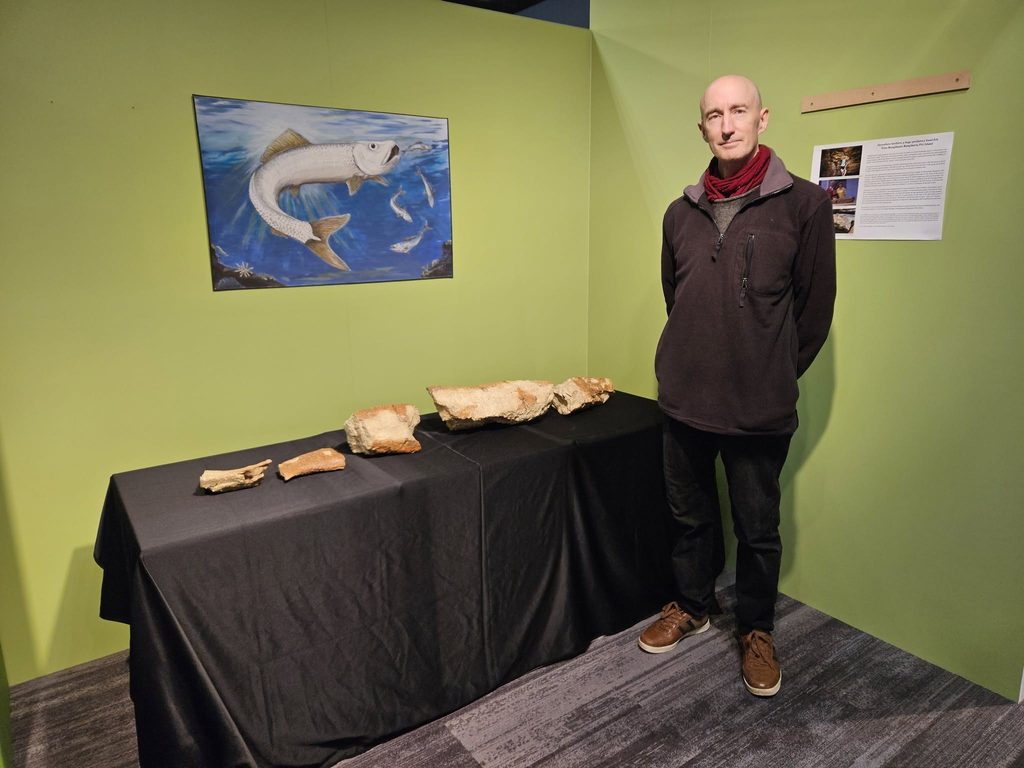
Learning that a 3D replica of Ikawaihere koehleri would reach the Chatham Islands Museum in time for the festival, Jenny built her classroom presentation around the fossil to introduce students to evolutionary processes—fitting the bill of local science. It was the first time Pitt Island School had participated since the festival began in 2021, due to the logistics of ferrying scientists some 50 minutes across the often-turbulent Pitt Strait from Chatham Island. Four other scientists and educators braved the strait to join Jenny at the remote school during the festival: seabird biologist Johannes Chambon, ecologist Rachel Klein, marine technical adviser Hannah Hendriks and lichenologist Campbell James, who showed the students how to fly a drone.
Based on previous experiences teaching English in Japan, doing science outreach, and watching young students endure science presentations dragging past 60 minutes with only PowerPoint slides to look at, Jenny wanted an interactive presentation no longer than 10-15 minutes. Which is also the “hard line” she laid down for the school visiting scientists too. “So, I wanted to follow that myself, as it needs to be hands-on, interactive, short and sweet. But also, let the kids explore, let the kids discover the answers, don’t tell them, let them find them. At the same time, try and teach them some kind of critical thinking skills and give them the resources they need to get to the answer.”
While the full-scale 3D replica had gone on display at the Chatham Island Museum, Jenny printed a half-scale replica (small enough to fit into her suitcase) on her home 3D printer, knowing that the six pieces could be presented as a puzzle to the students, which they’d quickly figure out was a fish by its skull and scales—helped by most of them having farming or fishing parents. “They’ve all seen a fish. They’ve all seen a dead fish with fish bones.”
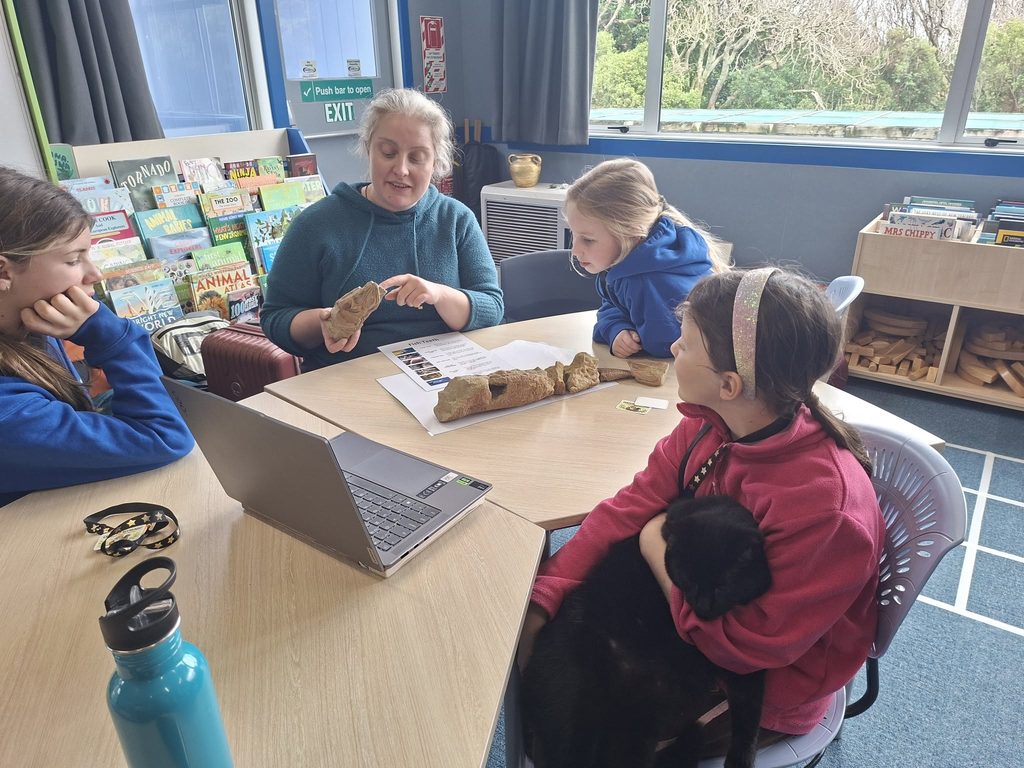
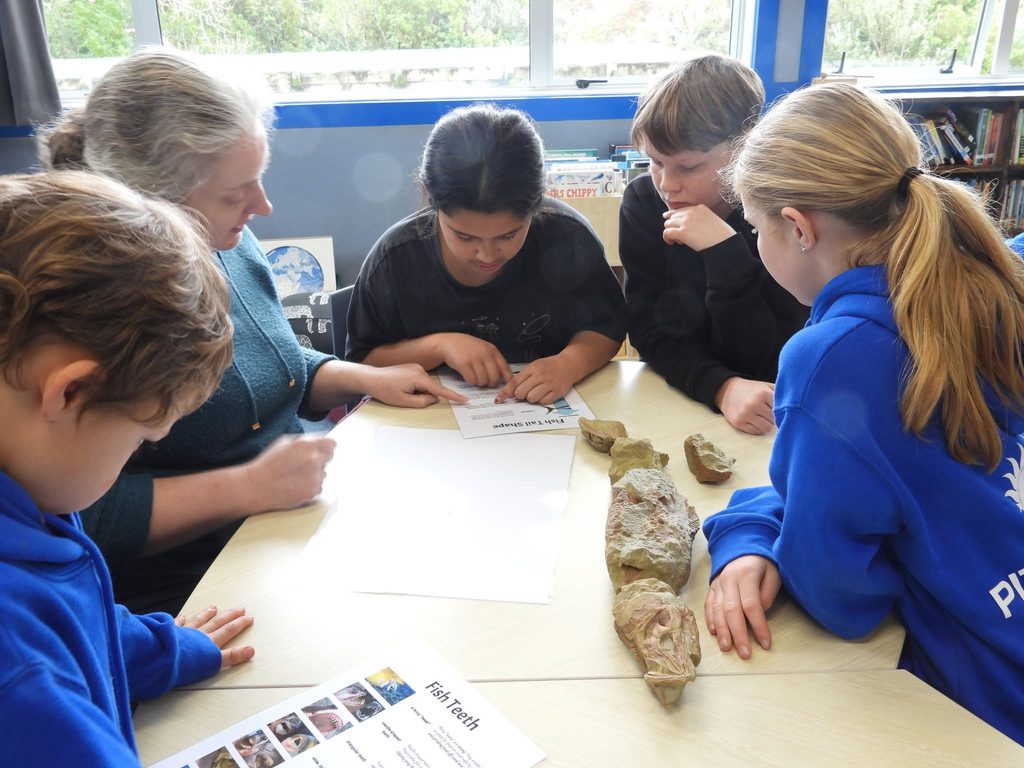
Then, reference charts with different tail shapes, mouth shapes, and body structures, with short explanations, made the children question how the differences affected whether the fish swam fast or slow, or whether it was a predator or a grazer. Its modern relative, a tarpon that lurks around subtropical islands in the Caribbean, couldn’t live in the waters surrounding Pitt Island now, so the students explored how the local environment has changed. “I always ask them the question and then see what they think and then help give them information as they need it to guide them to where we want them to get to. So, it’s hopefully a fun process of exploration for them rather than sitting there listening and absorbing like a sponge exercise.”
It was the first time Jenny had trialled the presentation, almost last in the presenter line-up too, which provided learnings for future outreach. “By then the kids had had a lot of very diverse information [and] I could see their attention sort of starting to wane towards the end. So, the hardest bit was actually taking that next step once we’d worked out what the fish was towards what does that mean for the environment and how has that environment changed compared to what you see around you today.” Time and energy constraints meant the students didn’t quite get to the final conclusions, but overall, seeing the students use their imagination in a guided but still self-discovery way still counted as a success, she says. “Like, what have I just learned? And how have the observations I’ve just made explained something else in the world around me or filled in a part of the map that either was blank before, or I didn’t even know existed before? It’s broadening that horizon and helping fill it in. But also at the same time, developing the skills they’ll need to do that with other things, that critical thinking.”
Jenny’s tips for turning local stories into scientific inquiry
Start with observations: Every rock and landscape has a story, so begin by asking students what they can see, feel, smell or touch. Encourage them to use this evidence to form interpretations, estimates or questions—then investigate how those ideas could be tested.
Leave room to explore: Avoid steering every student towards the same answer. Let them create, experiment and follow their own questions before asking them to identify patterns, features or explanations.
Build on what students already know: Students often understand more than they realise from observing the landscapes and environments around them. Help them connect this everyday knowledge with scientific ideas, then explore what those features reveal about change through time.
Ask scientists for support: Teachers don’t need to know every answer. Local and national scientific organisations can help identify experts who know your region—and those relationships benefit scientists too, helping them become better communicators and collaborators. “I think building those relationships is really, really valuable because then you can share that information both ways, not just that teachers can find out more; they can pre-ask the questions they think their students are going to ask and get the answers so they’re pre-prepared, or they can get help delivering the content. But also, I think it’s really valuable for scientists to talk to teachers so that they can learn how to communicate better with non-scientists. Sometimes it’s difficult; there are capacity issues and time issues, obviously. But where it can be done, that’s where the real gold happens, where there are those kinds of good relationships and collaborations between people who have the teaching expertise and people who have the subject matter expertise. It’s really valuable if people can form those relationships.”
Jenny Stein
Being part of the festival and developing the presentation combined Jenny’s passions for science and education. She started university with a zoology degree but switched to geology because “it had better field trips”. This led her to hike through Tasmania searching for “economically useful rocks” for mineral exploration companies—which has a very low success rate, which she happily admits allowed her to “just get a wonderful tramp through the wilderness” before a three-year stint teaching English in Japan ended on a slow boat back to Aotearoa, teaching English and hosting geology talks on port landscapes for three months aboard Peace Boat. While having all the cruise ship trappings, the NGO-run ship also offers passengers learning experiences and lectures on various topics; everyone—including Jenny—was surprised when her geology talks proved so popular.
She arrived home shortly before the pandemic and meshed her love of education and science with a postgraduate science communication diploma at the University of Otago before working as a communications advisor for Resilience to Nature’s Challenges. There she worked alongside the late Distinguished Professor David Johnston from the Joint Centre of Disaster Research at Massey University, which led to her assisting with the Chatham Islands Festival of Science, which David co-founded in 2021. Jenny is currently working toward a PhD at Massey University, looking at public education to enhance household natural hazard preparedness and resilience and can be contacted by email.
Resources
Chatham Islands Festival of Science programme
Research article | A New Tarpon-Like Fish (Elopomorpha, Megalopidae) With Exceptional Preservation and Unusual Features From the Paleogene of Pitt Island, Chatham Islands, New Zealand. Read online
University of Otago article | Study of predatory fossil fish honours late researchers. Read online