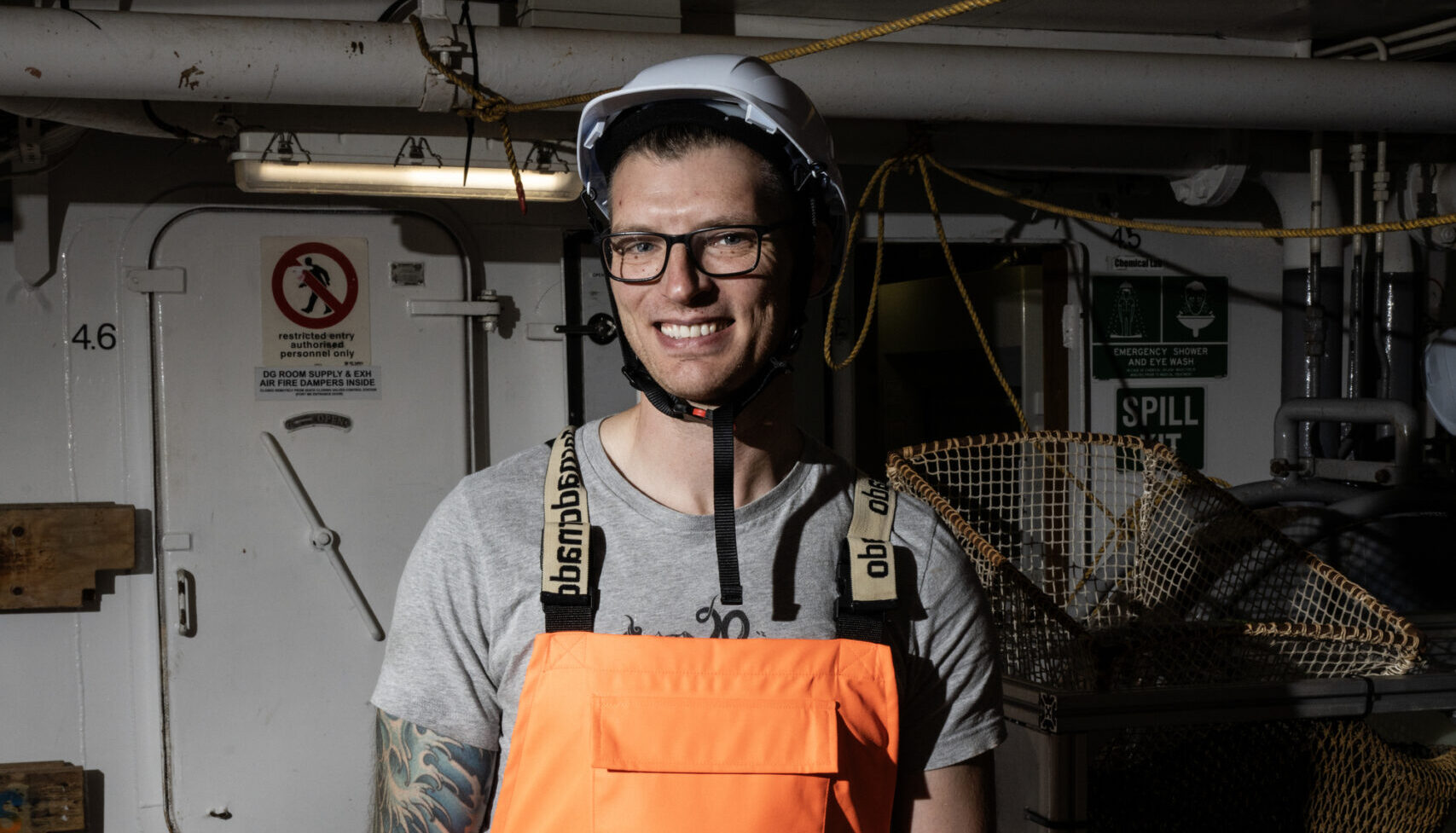
In the food-starved abyss, being a bit dim can be a remarkably effective survival strategy: “If you can be stupid, it’s far more efficient,” says deep-sea fish zoologist Dr Thom Linley. Many scavenging fish spend their lives blundering about vast sandy plains in search of decaying morsels—a lifestyle which Thom says doesn’t demand a large, energetically expensive brain. Understanding these evolutionary trade-offs, along with a talent for No. 8 wire tinkering, helps Thom design and deploy technology built from repurposed odds and ends in some of the ocean’s deepest reaches to catalogue life from previously unexplored habitats. NZASE chats with Thom about his “beloved” deep-sea fish and looking after the world’s largest collection of New Zealand fish as Curator of Fishes at the Museum of New Zealand Te Papa Tongarewa.
Deep-sea fish were an unlikely obsession for a boy raised in the industrial revolution-shaped central England. Yet by the age of five, Thom was reading rockpool and aquarium guides cover to cover: “I don’t think you are meant to read them like a story!” After much parental pestering, three goldfish arrived for his sixth birthday: Goldie, Silvery and Nugget. “That was my beginning of fish keeping,” says Thom of the colourful trio that inhabited a little tank on his bedside dresser.
Years later, Thom would visit Aotearoa during research trips to the more than 10,000-metre-deep Kermadec Trench as part of his marine biology, zoology and marine science studies, and a backpacking trip with his future wife. He fell in love with the country and declared that working with fish at Te Papa would be his “perfect” job. A decade later, his “bluff” was called when the museum advertised for a Curator of Fishes. Thom relocated his young family from England for what he suspects may be his last job. “[These roles] don’t come up very often, let alone in a collection and in a place I’d fallen in love with.”
As Curator of Fishes, Thom oversees the country’s largest fish collection and the world’s largest collection of New Zealand fishes (over 250,000 specimens). Among the collection is Thom’s favourite fish—a hadal snailfish (below) from over 7 kilometres deep—which he collected during his student days. He admits it’s possibly an unexpected favourite for someone who specialises in deep-sea fishes. When most people picture fish from the depths, they imagine creatures of “teeth and gnashiness…they think it must be really horrible,” but Thom considers the pale, squishy fish ambassadors of the deep sea: “They’re adorable. They’re really, really cute—they look like they’re smiling.”
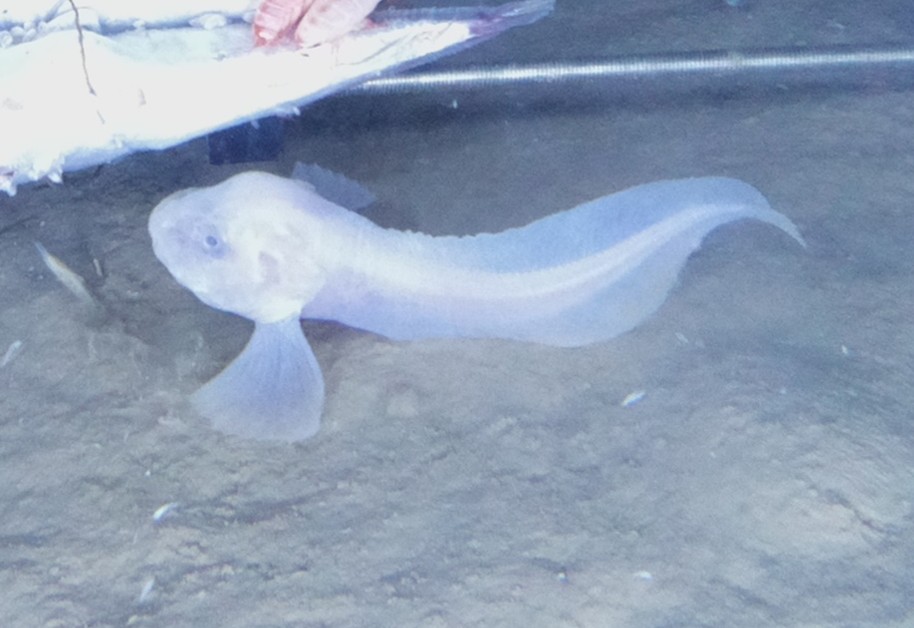
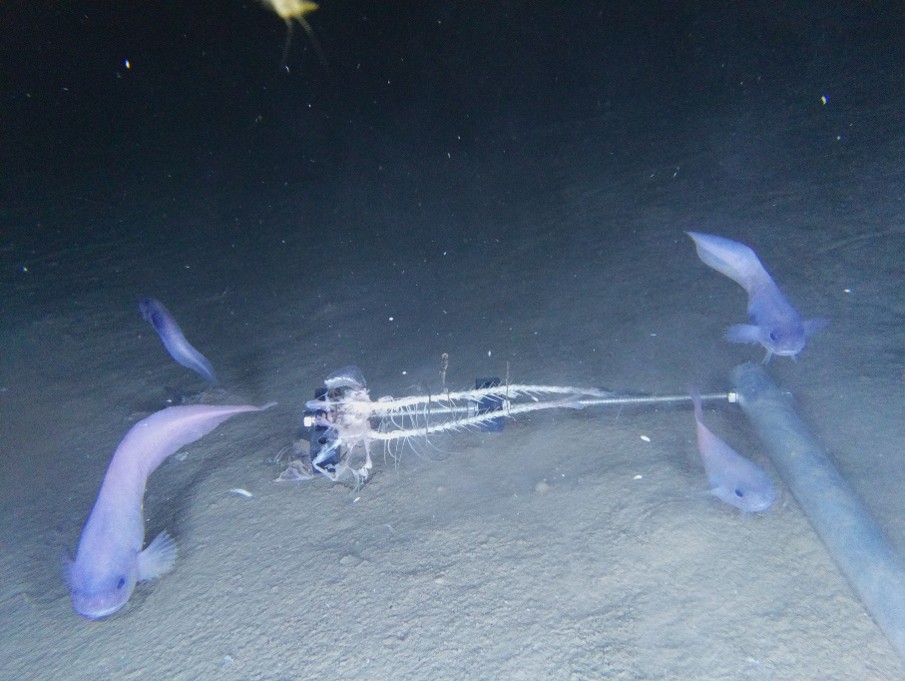
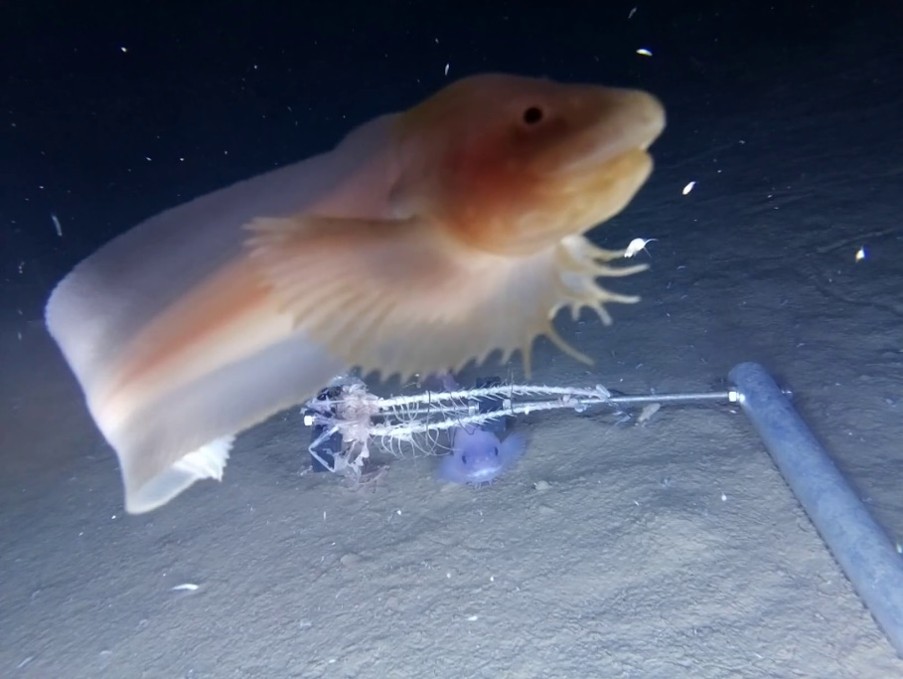
Trapping deep-sea fish | Bounty Trough
Understanding how deep-sea fish navigate their world allowed Thom to design a trap used during a 2024 Ocean Census expedition to the Bounty Trough, east of the South Island—adding two new species to the expedition’s tally of more than 100 discoveries. Thom built the free-falling trap that sinks through pitch-black, freezing water—sometimes in areas where the pressure is over a thousand times greater than at the surface—to lie almost flush with the seafloor.
Scavenger fish lured by odour plumes from herring bait swim up a shallow ramp—never noticing they have left the seafloor—and through a letterbox-style entrance into the trap. Once in, they are unable to escape because, after a lifetime glued to the seafloor searching for food, they are thwarted by the concept of swimming upwards. “As much as I love them and as much as I try and champion them,” says Thom, “brains are energetically expensive things [and] there isn’t much food in the deep sea.”
Retrieving the trap is done via a burst of coded sound—like a beeping, squealing old dial-up modem—sent through kilometres of ocean to an underwater microphone, instructing ballast to be dropped, allowing the trap to float and resurface. The final half hour on the ship’s bridge waiting for its bobbing orange flag to appear is “always immensely stressful…[and] feels like an eternity,” says Thom—who suspects his fondness of orange comes from associating it with relief.
Despite all the testing and calculations, sending newly minted inventions into the deep is nerve-wracking. “The real world is always a bit different,” says Thom, who learnt how to make this form of ‘pop-up’ vehicle from Professor Alan Jamieson, his PhD supervisor, longtime collaborator and co-host of the Deep-Sea Podcast. But equipment that has made the journey dozens of times is easier to predict: “I remember Alan looking at a stopwatch and counting three, two, one, and then the flag popped up. [After] coming up 10,000 metres vertically, that’s pretty impressive.”
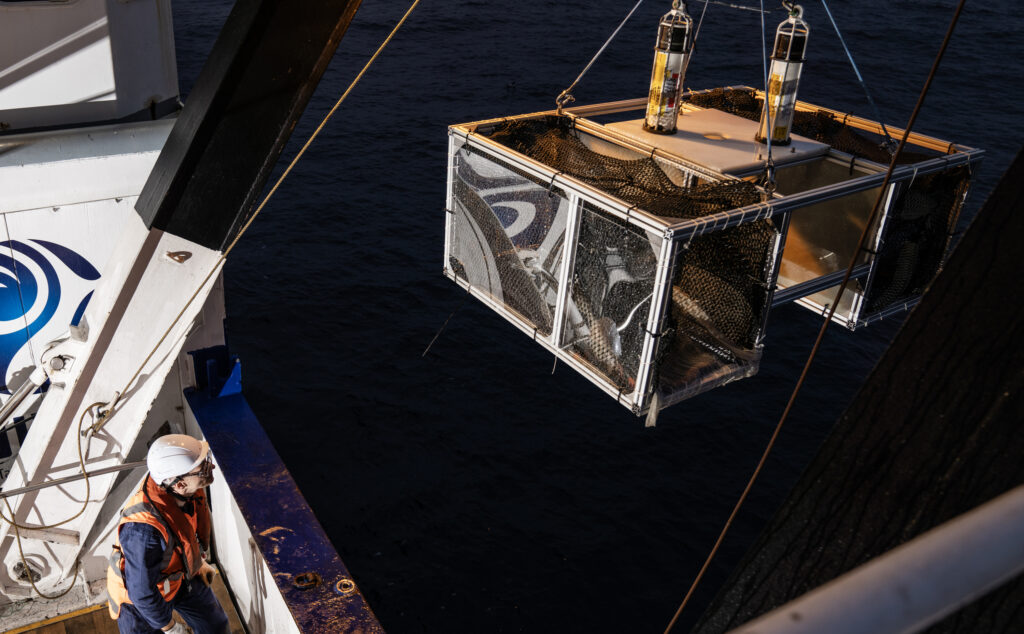
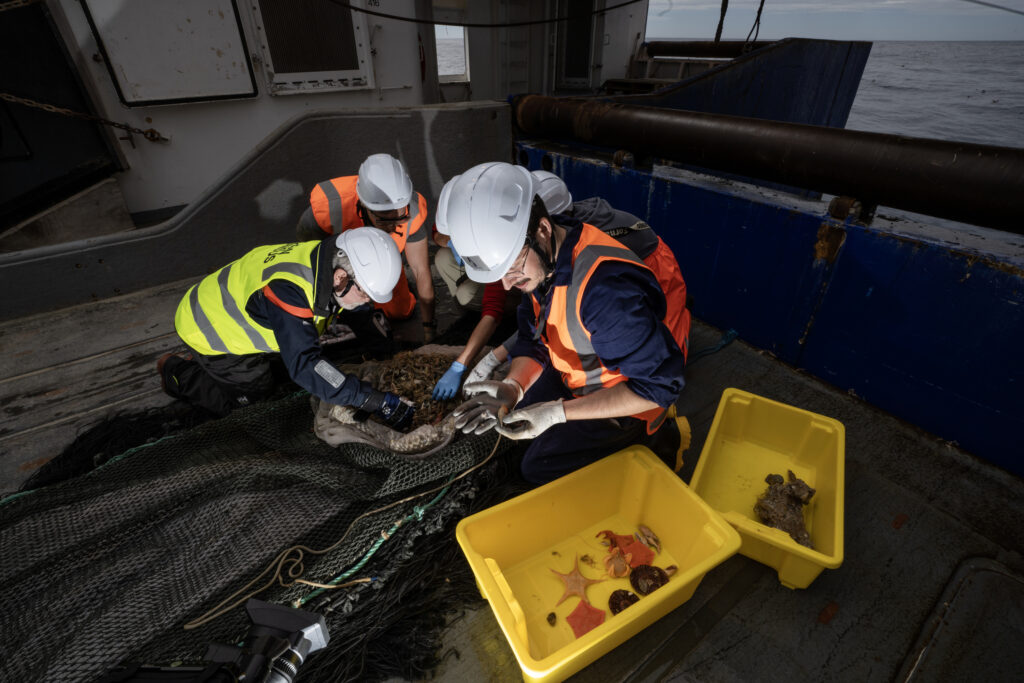
Unattached, the trap’s free-falling design also spared the researchers the need for specialised expedition ships carrying 10,000 metres of cable—operations costing “hundreds of thousands of dollars a day” because very few vessels on the planet could lower something down that far, says Thom. “It’s great not to have to worry about all that wire.” During his Kermadec Trench work, the team could explore some of the deepest trenches surrounding Aotearoa using Earth Sciences NZ’s 28-metre Kaharoa vessel, deploying the trap into previously unexplored, budget-constrained depths. Thom says that despite the ocean floor being reassuringly difficult to miss, even at terminal velocity, it can take four hours for equipment to reach the world’s deepest places: “Which is really humbling about how great these distances are.”
It’s these longer expedition trips that Thom feels better equipped to handle. Despite spending more than 800 days at sea, Thom spends the first few days of most expeditions seasick: “[I can] acid wash people’s hulls…if they want to get rid of some barnacles.”
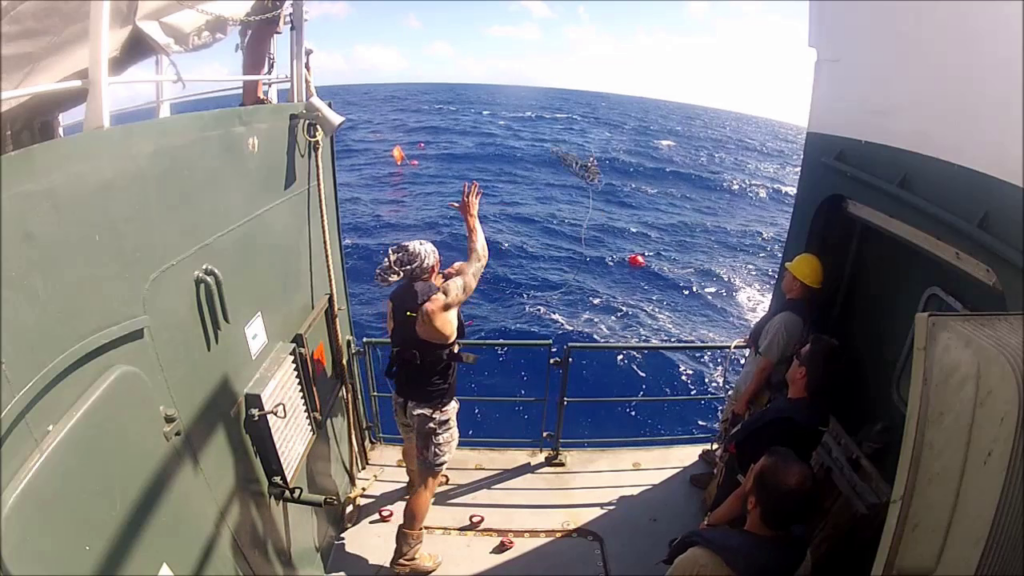
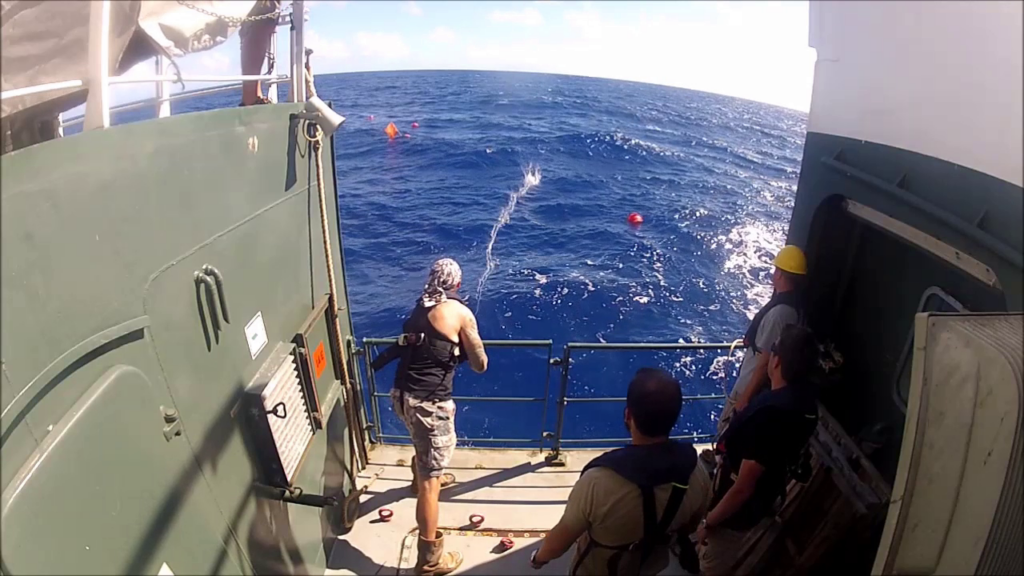
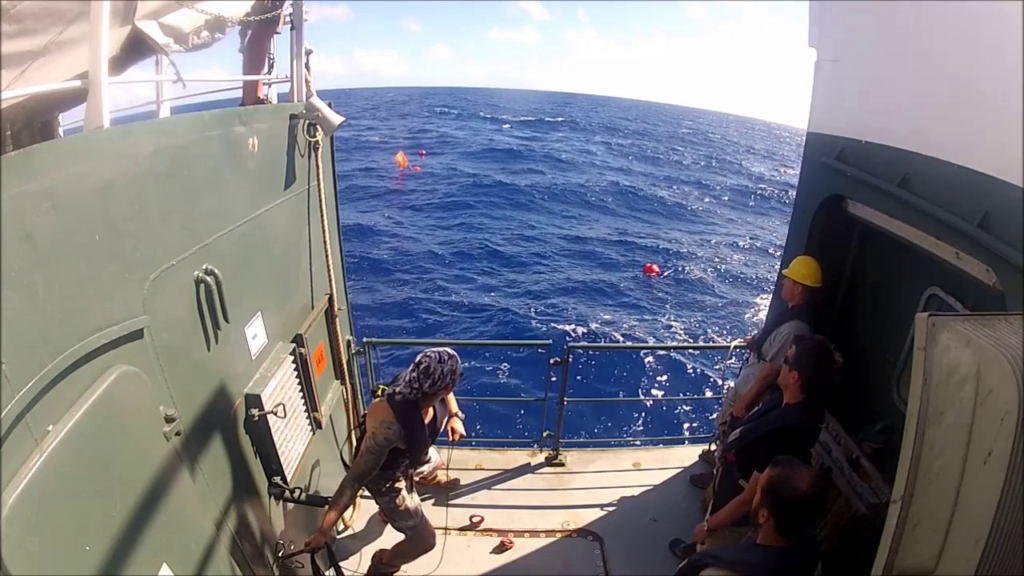
Above: It’s not something you’d imagine a scientist doing, but Thom has gotten really good at throwing a grappling hook to secure equipment once it resurfaces. Photo credit: Thom Linley
Project ESCA
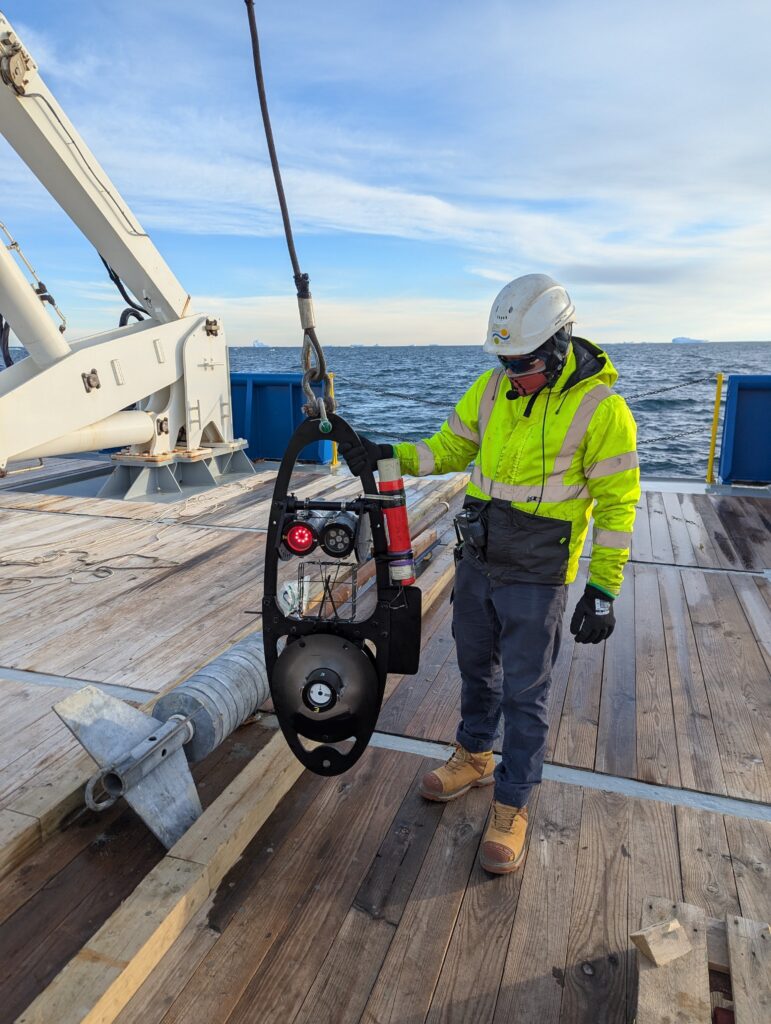
Thom suspects he has always belonged in New Zealand because of his ‘No. 8 wire’ tinkering. His latest invention—niftily incorporating an inexpensive baby food pouch—is helping hunt one of the ocean’s giants: the colossal squid. Despite weighing up to 500 kilograms and stretching 7 metres long, colossal squid are rarely filmed swimming in their natural habitat. Thom suspects that’s because most cameras descending into the deep look suspiciously like a hunting sperm whale. “So, they’re hiding themselves away,” he says.
To reach these seldom-seen invertebrates inhabiting the vast midwater realm, he teamed up with Professor Kat Bolstad from Auckland University of Technology’s ‘Squid Squad’ to develop a 360-degree camera and lure—dubbed Project ESCA—mimicking the light-producing organ of a large female, in the hope that a curious squid will drift closer for a look.
Left: The ESCA lure being deployed in Antarctica. Photo credit: Thom Linley. Te Papa (257271)
Its design reflects Thom’s latest obsession: identifying the human biases built into deep-sea exploration. “We’re still pumping white light into [the ocean] and recording with cameras that work like our eyes,” he says. “It’s really important to remember that [our world] is not the world these animals live in.” Instead, the lure uses wavelengths of light Thom suspects colossal squid can’t see: deep red light for illumination and to avoid startling the squid while still capturing usable footage, and a deep royal blue light they can see to mimic natural bioluminescence.
Watching delicate deep-sea creatures drift effortlessly through pressures that require humans to hide behind two-inch-thick steel housings makes some explorations into the deep sea feel like “brute force”, says Thom—fighting the environment rather than working with it. Instead, he looks for hacks that work with the physics of the deep sea. One solution to a stubborn lure battery-housing problem came from an offhand conversation with Kat about eco-friendly parenting: reusable baby food pouches. Although it doesn’t “look that impressive”, admits Thom, the flexible plastic pouch acts as an oil-compensated container that equalises with immense pressure, saving the project tens of thousands of dollars.
While he doesn’t think he’s the smartest person in the room, often being surrounded by “some really smart people,” Thom suspects his dyslexia and neurodiversity give him a valuable left-field perspective. “I do think I have different ideas. And that’s where a lot of the tinkering has come around. I repurpose a lot of weird off-the-shelf things into deep-sea tech just because I look at it from a slightly different angle. I’m a big believer in humanity’s strength being our variation. I don’t think there’s a correct human. I think that we’re collaborative animals…and that we are strongest when we have a variety of people working together.”
Museum curation
Despite being smaller in number than many international research collections, Te Papa is known for preserving large, complete specimens because otherwise the “full story” can be lost if only parts of animals or juvenile specimens are retained, says Thom—especially for future commercial fish management decisions. Huge tanks beneath the museum house fish weighing 200-300 kilograms: Queensland groupers, sleeper sharks and ocean sunfish. The museum also has four colossal squid specimens, including the world’s only publicly displayed specimen collected in 2003 after becoming entangled in a longline from a New Zealand fishing vessel in Antarctic waters—Thom suspects she either didn’t want to give up her meal or was too weak to dive after the encounter. But preserving large specimens requires space. Having nearly outgrown its central-Wellington facilities, the research team and the ‘wet’ (preserved in alcohol) collection will move to a new $155 million Biodiversity Research Centre in Upper Hutt in 2028.
Within the collection are deep-sea fish with extraordinary physical adaptations to life down deep—despite not firing many synapses. Adaptations which fascinate Thom: “Fish that absorb almost all light, who look like a featureless void even with the most powerful camera flash; fish that can go without a meal for months and, not wanting to miss their chance, can eat prey larger than they are; fish that live happily under pressures that our best technology struggles with.”
One of the biggest shifts from being an independent researcher to becoming a curator, Thom says, is learning to anticipate not only what a specimen can tell scientists now, but how it might support future research. “I’m trying to guess what the future is going to require. I want somebody to need a piece of data, a tissue sample, or a specimen in 50 or 100 years’ time… and my name is on the side of the vial. And they’ll be: ‘Thanks, Thom. Thanks for getting what we needed when you were there’.”
Each specimen is a time capsule, he says, and the older it gets, the more valuable it becomes. “We have fish from before there was nuclear testing, before there were forever chemicals, before there were plastics. They represent a time that you can’t go back and measure anymore.”
Thom often finds himself thanking the researchers who came before him. Seeing the handwriting of scientists he has long admired creates a connection across generations. “There’s this weird sort of out-of-time, Doctor Who-style time traveller element to museum collections where my collaborators might have been dead for 100 years. It’s somebody you probably read a lot of their research, somebody you already have a fondness for, and there is their handwriting. And you can do a piece of research thanks to them thinking ahead and them taking care of what you needed. I hope to be that person for people in the future.”
Dr Thom Linley
Dr Thom Linley holds a BSc (Hons) in Marine and Freshwater Biology and an MSc in Marine Biology from the University of Wales, as well as an MPhil in Zoology and a PhD in Marine Science from the University of Aberdeen. You can follow him online at Instagram, X, Bluesky or on The Deep-sea Podcast where Thom and Professor Alan Jamieson (world expert on the deepest parts of the ocean) host a monthly podcast featuring guests discussing cutting-edge deep-sea science and technology and tales of adventure on the high seas.
Ngā kupu
Ika: Fish
Kaipuke: ship
Kaipūtaiao / kaimātai pūtaiao: Scientist
Mātauranga a Tangaroa: Knowledge pertaining to Tangaroa
Moana: Sea, ocean, large lake
moana tuauriuri: Ocean, open sea
Ruku: to dive, diving
Tangaroa: Atua of the sea
Te Moana-nui-a-Kiwa: Pacific Ocean
Wai: Water
Classroom posters: Where can science take you?
More resources
Ugly Fish Quiz: Can you find New Zealand’s ugliest fish? Take the quiz here.
Image credits
Thom profile: Credit Earth Sciences NZ / Ocean Census / Rebekah Parsons-King
Hadal snailfish: Credit Thom Linley